Covered vs Uncovered Boat Storage in Atlanta
Boats face specific challenges in Atlanta-area storage that differ from cars or RVs. The horizontal surfaces (deck, seats, console), gel coat finish, and canvas/vinyl components are all vulnerable to Georgia's sun, hail, and humidity. The covered vs. uncovered decision hinges on how much protection you need and what it's worth to you.
What Covered Boat Storage Provides
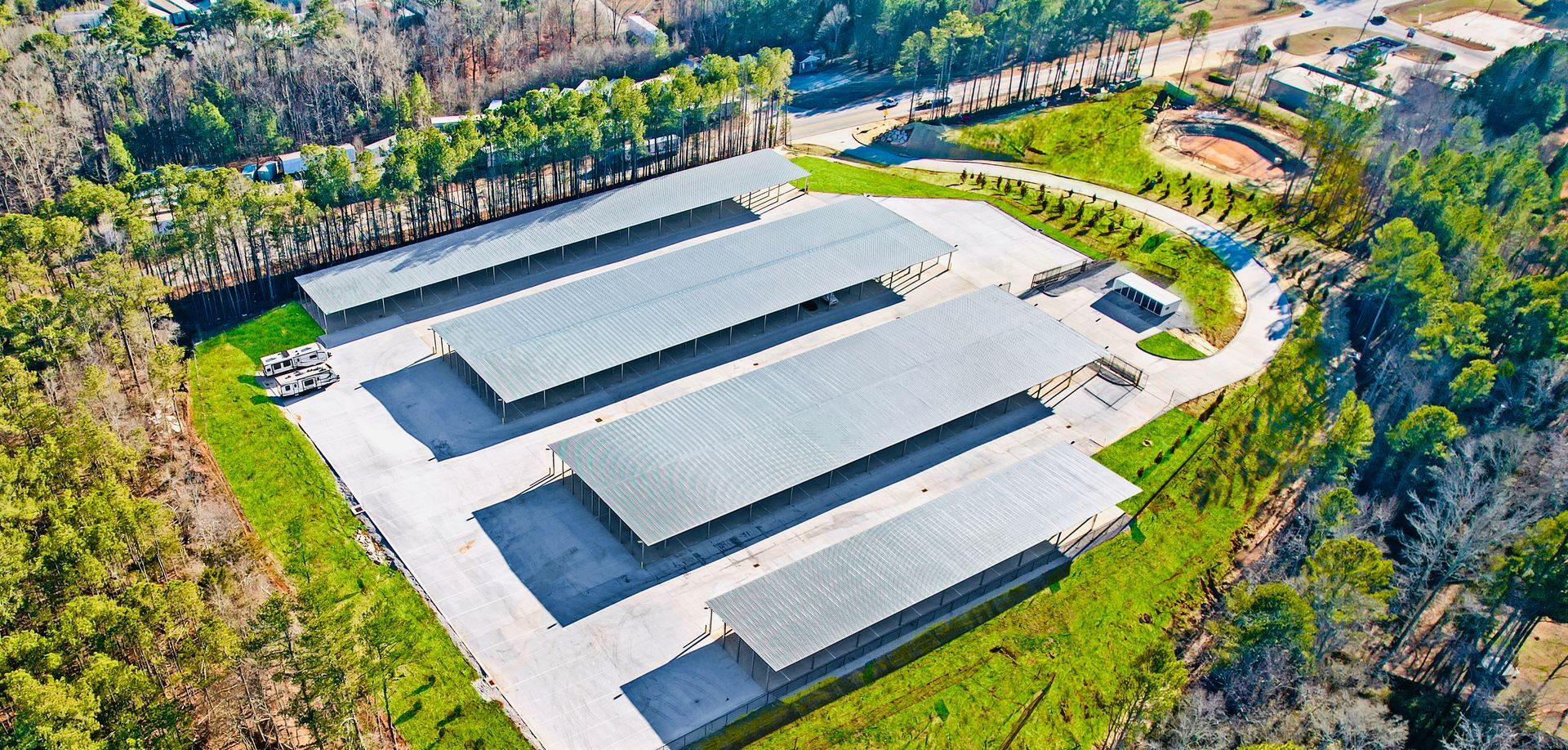
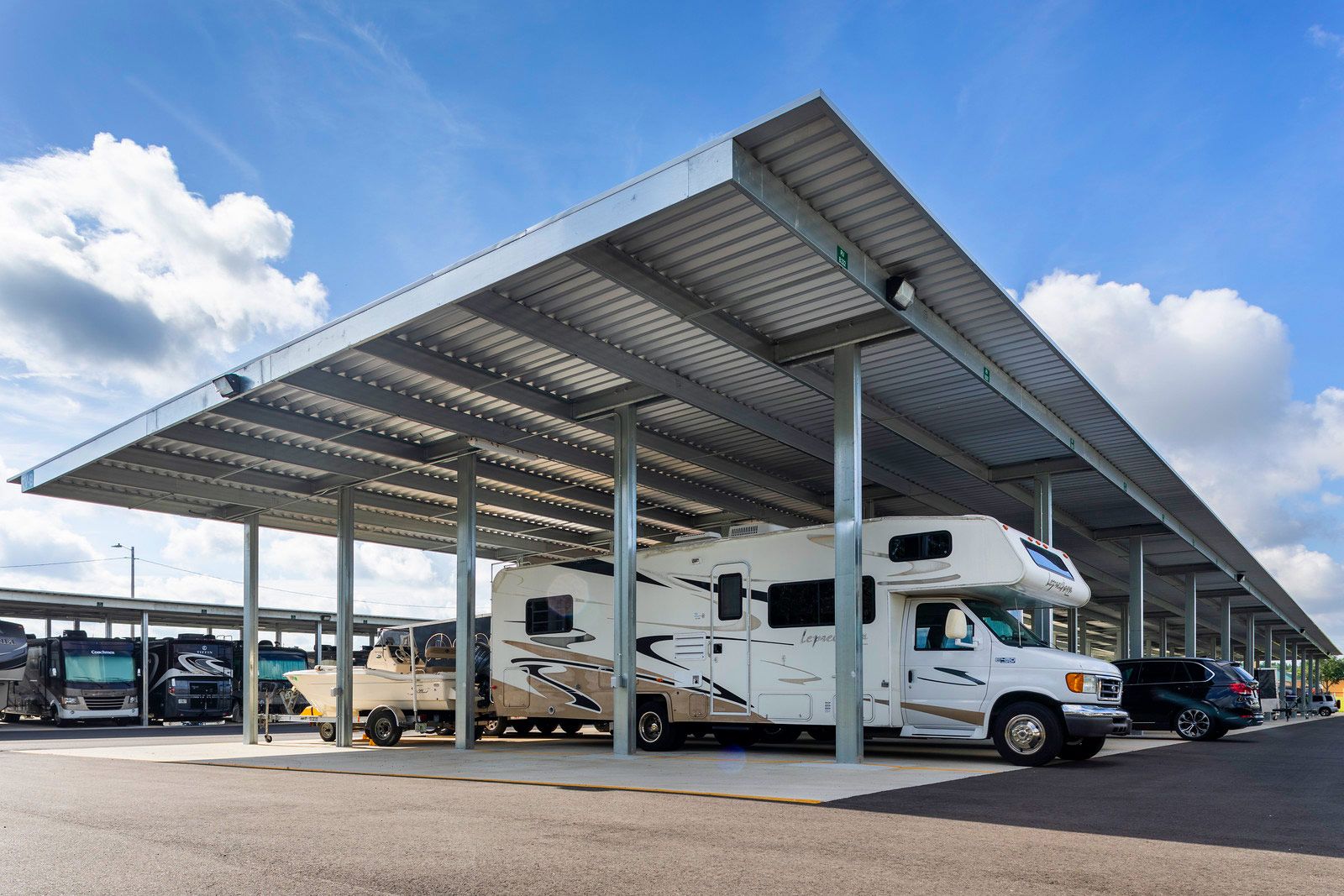
Covered storage means a roof structure over your boat and trailer—typically a metal carport-style canopy with open or partially enclosed sides.
Protection against:
UV radiation: This is the big one. Gel coat chalks and oxidizes under constant sun exposure. Canvas tops, seat vinyl, and plastic components fade and crack. A roof overhead eliminates direct UV entirely.
Hail: Georgia averages 2-4 significant hail events per year, usually in spring. A single hailstorm can cause thousands in damage to gel coat, canvas, and electronics. Covered storage completely eliminates hail risk.
Tree debris: Branches, sap, leaves, and bird droppings. A roof catches most of this before it reaches your boat.
Rain accumulation: While boats handle rain, covered storage keeps the interior drier and prevents water pooling issues with improperly fitted covers.
What covered storage doesn't provide:
Humidity control: Covered spaces are still open to ambient humidity. Mold and mildew remain concerns.
Side protection: Wind-driven rain, dust, and pollen still reach the boat.
Temperature control: Heat is reduced (no direct sun) but not eliminated.
What Uncovered Storage Means
Your boat sits in an open parking space, exposed to everything.
Advantages:
- Lower cost (typically 25-40% less than covered)
- Often more availability
- Easier maneuvering (no height restrictions)
Disadvantages:
- Full UV exposure year-round
- Vulnerable to hail
- Collects debris, bird droppings, pollen
- Interior bakes in summer heat
The Cost Comparison
For a typical boat on trailer in the Atlanta Metro area:
Uncovered storage: $75-150/month depending on boat size and facility
Covered storage: $100-200/month depending on boat size and facility
Premium difference: Roughly $25-75/month, or $300-900/year
When Uncovered Storage Makes Sense
You Use the Boat Frequently
If you're taking the boat out every 2-3 weeks during season, it's not sitting long enough for serious UV damage to accumulate. You're already washing it regularly. The exposure between uses is manageable.
Your Boat is Older or Basic
A 15-year-old bass boat with existing oxidation doesn't benefit much from covered storage—the damage is already done. A basic aluminum fishing boat handles weather better than gel coat cruisers.
You Have a Quality Fitted Cover
A good boat cover (mooring cover, full travel cover) provides substantial protection. Combined with a well-designed cover support system, you can achieve 60-70% of covered storage's protection while paying uncovered rates.
Budget Is the Primary Constraint
If covered storage means you can't afford storage at all, uncovered is dramatically better than leaving the boat somewhere inappropriate.
You're Storing Short-Term
Three months of uncovered storage causes minimal lasting damage. It's long-term cumulative exposure that creates problems.
When Covered Storage Makes Sense
Your Boat is Newer or High-Value
A $60,000 center console with fresh gel coat deserves protection. The cost of covered storage over 5 years ($1,500-4,500) is a tiny fraction of the boat's value and significantly extends its appearance life.
You Store Seasonally (Not Using November-March)
Four months of continuous sun exposure each summer adds up. If you store through winter and don't touch the boat until April, covered storage protects during those long idle periods.
Your Boat Has Vulnerable Components
Canvas tops/enclosures: Sunbrella and similar fabrics last much longer out of direct UV.
Isinglass windows: Plastic windows crack and cloud faster in sun.
Vinyl seating: Even marine vinyl degrades faster with continuous UV exposure.
Electronics: Helm stations with exposed screens and instruments benefit from shade.
Hail Has Damaged Boats Before
If your area has hail history (most of metro Atlanta does), covered storage is cheap insurance against a single catastrophic event.
You Want Minimal Maintenance
Covered boats need less washing, less oxidation treatment, and less component replacement over time. The convenience factor matters if you want to spend time boating, not maintaining.
Boat-Specific Considerations
Pontoon Boats
Large horizontal deck area collects everything—debris, water, bird droppings. Covered storage particularly beneficial. However, many pontoons are too wide for standard covered spaces; verify dimensions.
Bass Boats and Fishing Boats
Often lower profile, somewhat easier to cover effectively. Many owners successfully use uncovered storage with quality covers.
Center Consoles and Bowriders
Gel coat and upholstery are significant investments. Covered storage helps preserve both.
Ski Boats and Wake Boats
Towers and added components make covering complicated. Check covered storage height clearance—many towers exceed standard 13-14 foot covered height.
Making the Decision
The 5-Year Test
Think about total cost over 5 years:
Uncovered at $100/month × 60 months = $6,000 Plus: Gel coat restoration ($500-1,500), canvas replacement ($1,000-3,000), potential hail damage (variable)
Covered at $140/month × 60 months = $8,400 Plus: Minimal additional maintenance
For many boats, covered storage pays for itself through reduced maintenance and preserved condition.
Your Usage Pattern
- Use the boat monthly during season → Uncovered can work
- Store for long stretches → Covered is worth it
- Keep boat year-round without seasonal storage → Covered strongly recommended
Oxford RV Storage Options
Oxford RV Storage offers both uncovered and covered storage for boats on trailers. The facility can accommodate various boat sizes; check height clearance for boats with towers or tall components.
Location along I-20 makes it convenient for boaters heading to Lake Oconee or other eastern Georgia waters. Compare the covered vs. uncovered options based on your specific boat and usage pattern.