Covered RV Storage vs Open RV Storage in Atlanta
The covered vs. open RV storage debate has a clear answer for most situations, but that answer depends on your specific RV, how long you're storing, and what you're willing to pay. This isn't a philosophical question—it's a cost-benefit calculation.
What "Covered" Actually Means
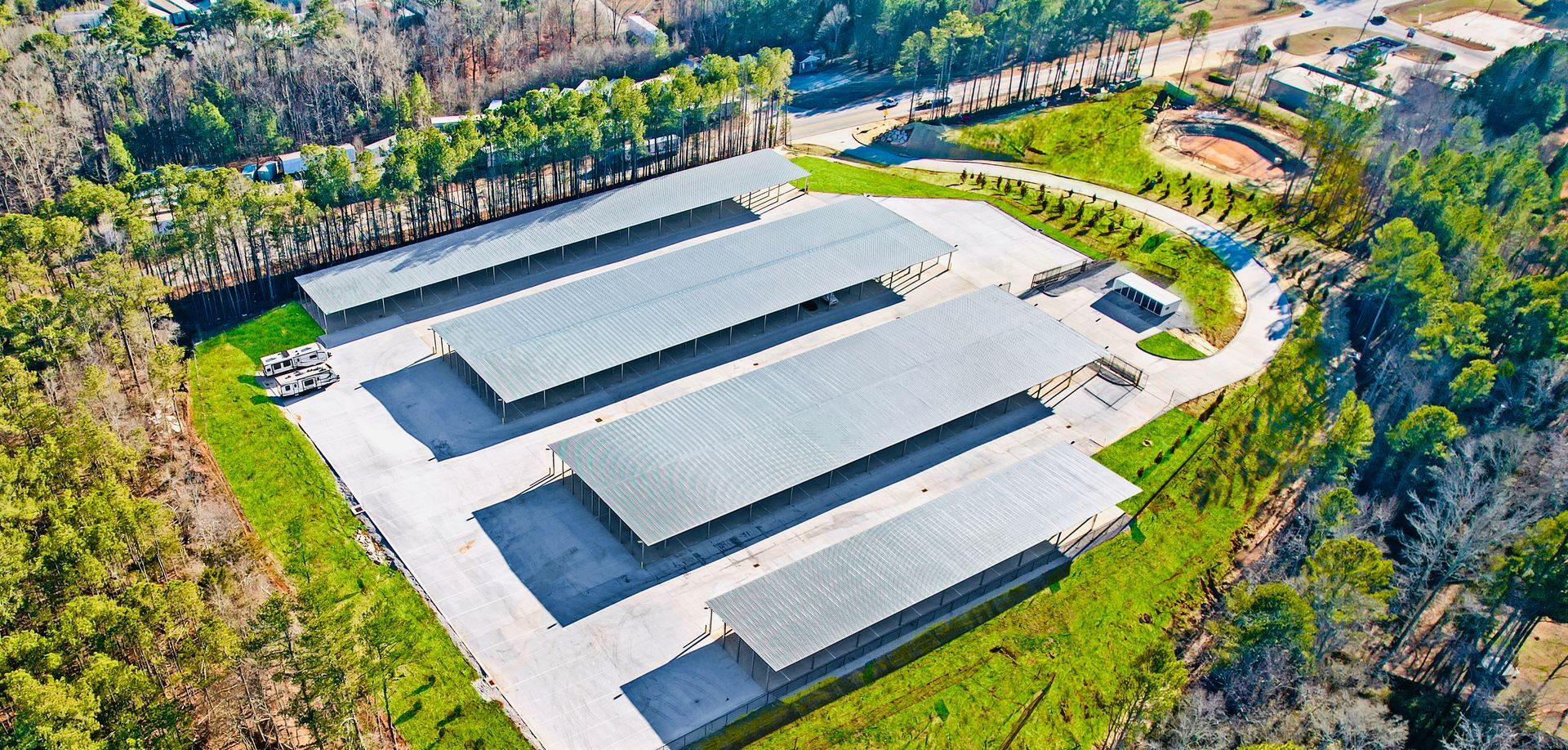
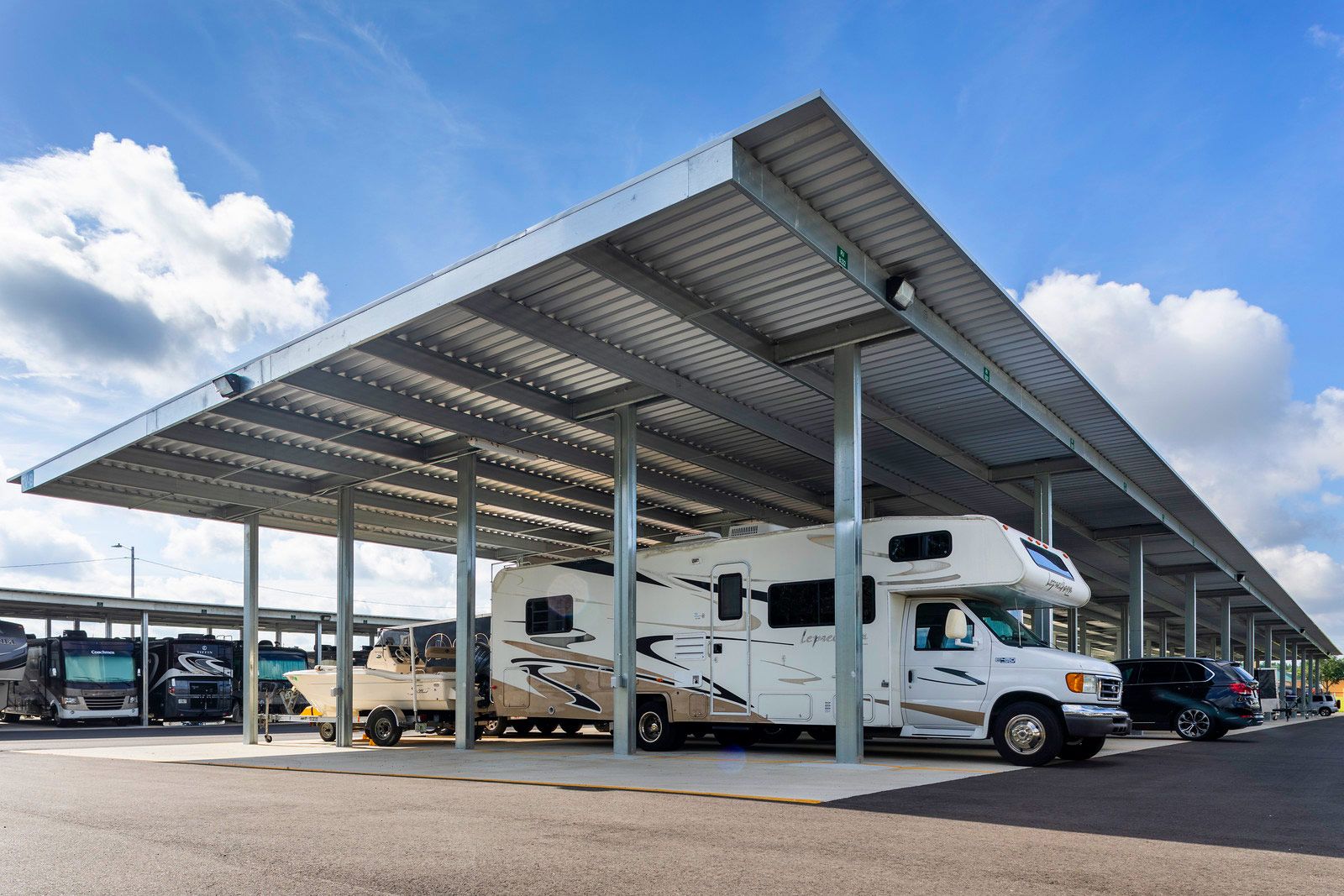
Covered RV storage typically means a metal roof structure over a parking space, with open or partially enclosed sides. It's essentially a carport designed for tall vehicles.
Standard covered storage provides:
- Protection from direct sun
- Protection from hail
- Protection from falling debris (branches, etc.)
- Reduced rain exposure (though driving rain still gets through sides)
Standard covered storage does NOT provide:
- Climate control
- Full weather enclosure
- Significantly reduced humidity
- Complete protection from wind-driven rain
Typical height clearance: 13-14 feet, which accommodates most Class A motorhomes and fifth wheels. Some facilities have taller options for oversized rigs.
The Actual Cost Difference
In the Atlanta Metro, expect covered storage to cost 30-50% more than equivalent open storage.
Example ranges (outside I-285):
- 30-foot travel trailer, open: $100-150/month
- 30-foot travel trailer, covered: $130-200/month
- 40-foot Class A, open: $150-225/month
- 40-foot Class A, covered: $200-300/month
On a $150/month open space, covered might add $50-75/month. Over a year, that's $600-900 extra. The question is whether that premium buys protection worth $600-900.
What You're Actually Protecting Against
UV/Sun Damage
This is the biggest differentiator. Direct Georgia sun causes:
- Roof membrane degradation (rubber roofs especially)
- Decal fading and peeling
- Paint oxidation
- Rubber seal deterioration
- Exterior trim cracking
Covered storage advantage: Significant. Eliminating direct UV extends roof life, preserves graphics, and slows exterior aging.
Timeline: After 2-3 years of continuous open storage, sun damage becomes obvious. After 5+ years, it's often severe.
Hail Protection
Georgia averages 2-4 significant hail events per year. RV roofs, being mostly horizontal and made of softer materials than car roofs, are particularly vulnerable.
Hail damage costs:
- Minor denting on metal components: $500-2,000
- Rubber roof damage requiring repair: $1,000-5,000
- Major storm damage with multiple systems affected: $5,000+
Covered storage advantage: Complete. A roof overhead stops hail entirely.
Risk calculation: Even one hailstorm that damages your RV can cost more than years of covered storage premium.
Rain and Moisture
Both covered and open storage expose RVs to moisture and humidity. Covered storage reduces direct rain exposure but doesn't eliminate moisture issues.
Covered storage advantage: Moderate. Less direct rain means less opportunity for water intrusion through compromised seals, but humidity affects both equally.
Heat
A covered space is cooler than direct sun, but not dramatically. On a 95°F day, open storage might mean 150°F inside your RV. Covered might mean 120°F inside.
Covered storage advantage: Slight to moderate. Still hot, but meaningfully less thermal stress.
When Open Storage Makes Sense
You use the RV frequently (monthly or more). If you're taking the RV out every 3-4 weeks, you're already cleaning it, inspecting it, and managing any issues. The cumulative exposure between uses isn't long enough for serious damage.
Your RV is older and already weathered. A 15-year-old RV with existing sun fade doesn't benefit much from covered storage. The damage is already done.
Budget is the primary constraint. If the choice is covered storage or no storage (keeping the RV somewhere inappropriate), open storage is vastly better than the alternative.
You're storing short-term. Three months of open storage causes minimal lasting damage.
When Covered Storage Makes Sense
Your RV is newer or high-value. A $150,000 motorhome deserves protection. The storage premium is a small percentage of your investment.
You're storing seasonally or long-term. Six months to a year of continuous storage is where sun damage compounds significantly.
Your RV has vulnerable features. Fresh graphics, aftermarket awnings, or sensitive exterior components justify protection.
You want to minimize maintenance. Covered storage means less washing, less seal maintenance, and fewer issues when you retrieve the RV.
You live in a hail-prone area. If your storage location has seen hail damage in recent years, covered storage is cheap insurance.
The Practical Recommendation
For most Atlanta-area RV owners who use their rigs 5-15 times per year and store them the rest of the time:
If your RV is worth over $50,000: Covered storage is probably worth the premium. The protection against hail alone justifies the cost, and the reduced maintenance and extended exterior life add up.
If your RV is worth $20,000-50,000: It depends on how long you plan to keep it. If you're selling in 2 years, open storage is fine. If you're keeping it for 10 years, covered storage preserves value.
If your RV is worth under $20,000: Open storage is usually the right call. The storage premium over time approaches a significant percentage of the RV's value.
Oxford RV Storage Options
Oxford RV Storage offers both open and covered storage for RVs. Located in Oxford, GA on the east side of the Metro, the facility can accommodate various RV sizes in both storage types.
When evaluating options, ask about covered space availability and height clearance for your specific rig. Covered spaces often fill up faster than open spaces, especially before storm season.