Best Camper Storage Lots Near Atlanta
Campers—travel trailers, pop-ups, truck campers, and small towables—are the awkward middle children of vehicle storage. Too big for your garage, too valuable to leave on the street, but not as demanding as a 40-foot Class A motorhome. Finding the right storage lot means understanding what campers actually need versus what RV-focused facilities assume you need.
What Makes Camper Storage Different
Size Considerations
Most campers fall into these categories:
Pop-up/folding campers: 10-16 feet collapsed, 16-23 feet deployed. Low profile when closed. These fit almost anywhere.
Small travel trailers: 14-22 feet. These are the sweet spot for storage—not tiny, not oversized.
Mid-size travel trailers: 22-30 feet. Start to need RV-appropriate facilities with wider spaces.
Large travel trailers: 30+ feet. Essentially need full RV storage accommodations.
Truck campers: Size varies, but these typically sit on your pickup and don't require dedicated storage unless you want to remove the camper.
Maneuvering Reality
Travel trailers back up opposite to how you turn the wheel. Many camper owners are comfortable towing forward but hate backing into tight spaces.
Storage lot implications:
- Pull-through spaces are ideal
- Wide aisles matter more than for cars
- End spaces or corner spaces give extra maneuvering room
- Some lots have attendants who help with difficult spots
Height Generally Isn't a Problem
Unlike tall Class A motorhomes, most campers are under 10-11 feet. Standard covered storage (13-14 foot clearance) accommodates nearly all campers. Even pop-ups, which need to open for cleaning or airing out, typically fit.
What to Look for in a Camper Storage Lot
Appropriate Space Sizing
Don't pay for more space than you need. A 20-foot travel trailer doesn't need a 45-foot Class A space.
Ask about space sizes and pricing tiers. Good facilities have multiple size categories.
Security Basics
Campers contain valuable items and are easier to break into than hard-sided vehicles. You need:
- Gated access with individual codes
- Adequate lighting
- Ideally camera coverage
- Perimeter fencing
Ground Conditions
Campers sit on trailer tires for extended periods. Standing water is bad for wheel bearings and can cause rust/corrosion.
Check that the lot has good drainage. Visit after a rain if possible.
Access for Seasonal Use
Most camper owners use their rigs spring through fall, leaving them stored November through March. But you'll want access during the season for frequent trips.
Confirm:
- Access hours match your usage (early morning/evening departures)
- No restrictions during peak camping season
- You can get in and out without advance notice
Typical Costs in the Atlanta Metro
Pop-ups and small trailers (under 20 ft):
- Outdoor: $50-100/month
- Covered: $75-150/month
Mid-size travel trailers (20-28 ft):
- Outdoor: $75-125/month
- Covered: $100-175/month
Large travel trailers (28+ ft):
- Outdoor: $100-175/month
- Covered: $150-250/month
These ranges vary by location. Inside I-285 costs more; the I-20 corridor east of Atlanta typically costs less.
Storage Type Decisions
Outdoor Uncovered
Appropriate for:
- Frequent-use campers (you're taking it out every few weeks anyway)
- Budget-priority situations
- Campers you plan to replace in a few years
Not ideal for:
- Long-term seasonal storage
- Newer or higher-value campers
- Owners who want minimal maintenance between trips
Covered Storage
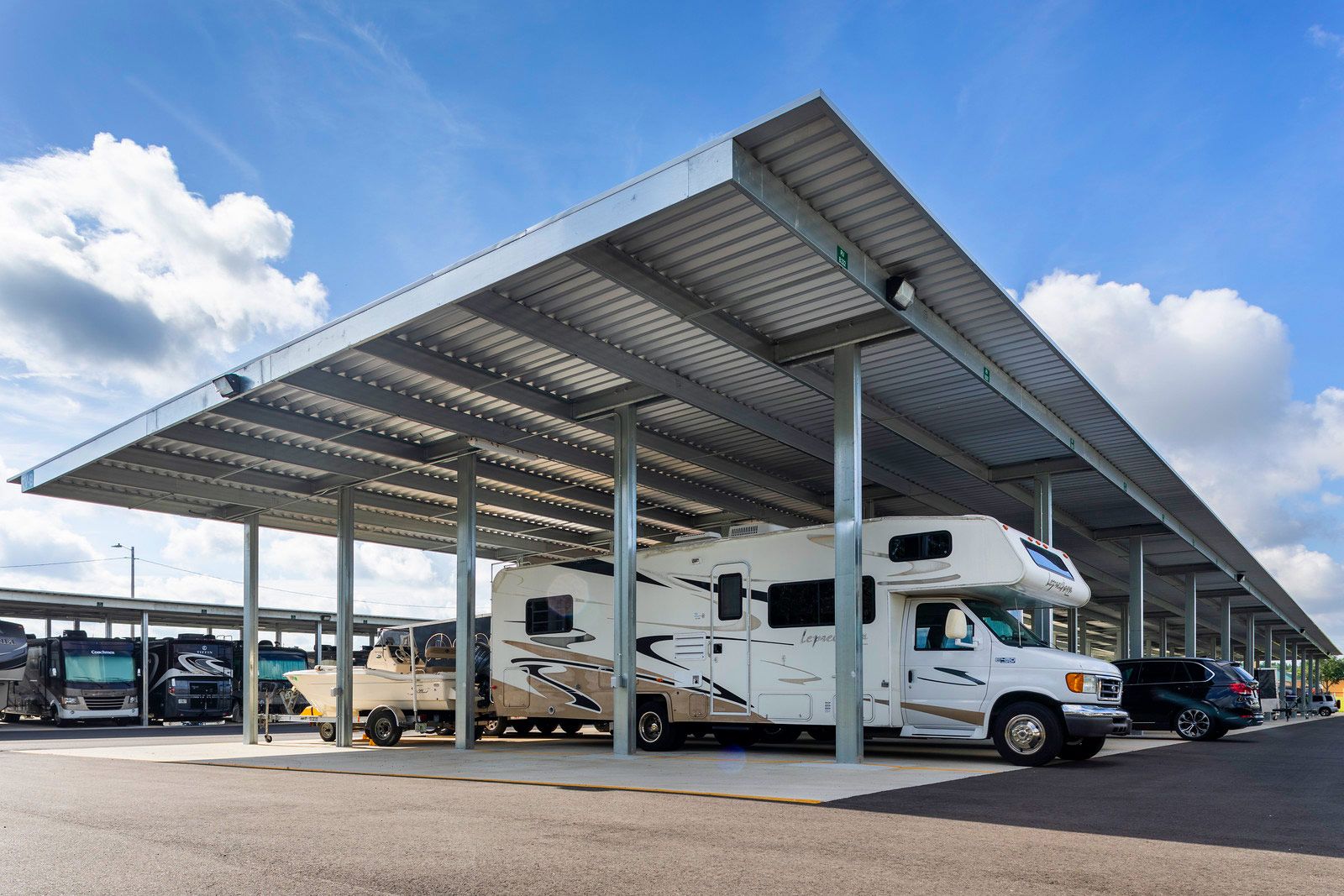
The practical middle ground for most camper owners. Eliminates:
- Direct UV damage to roof and exterior
- Hail risk (significant in Georgia spring)
- Tree debris and bird droppings
Typical premium: 30-50% over outdoor rates.
Enclosed Indoor
Usually overkill for travel trailers unless you have something particularly valuable or are storing for years. The cost premium is significant, and most campers don't need it.
Before Storing Your Camper
Standard Prep
- Clean inside and out — Don't store with dirt, debris, or food
- Empty holding tanks — Never store with waste in tanks
- Check roof and seals — Fix any issues before they become water damage
- Manage propane — Close tanks; some facilities require tanks removed
- Tire care — Proper inflation, consider covers for UV protection
- Battery management — Disconnect or use maintainer
- Ventilation — Vent covers that allow airflow prevent moisture buildup
Seasonal Winterization
Even in Georgia:
- Drain water systems before potential freeze periods
- Consider RV antifreeze for full winterization
- Don't store with water in lines November-March
Finding Camper-Friendly Storage
Not all RV storage facilities are equally good for campers:
Ideal facilities:
- Have multiple space sizes
- Don't force you into oversized (expensive) spots
- Have reasonable maneuvering for trailers
- Welcome smaller rigs rather than focusing only on motorhomes
Red flags:
- Only large spaces available (you're paying for space you don't use)
- Very tight lots designed for cars with some RV spaces added
- "RV storage" that's really just an afterthought
Oxford RV Storage
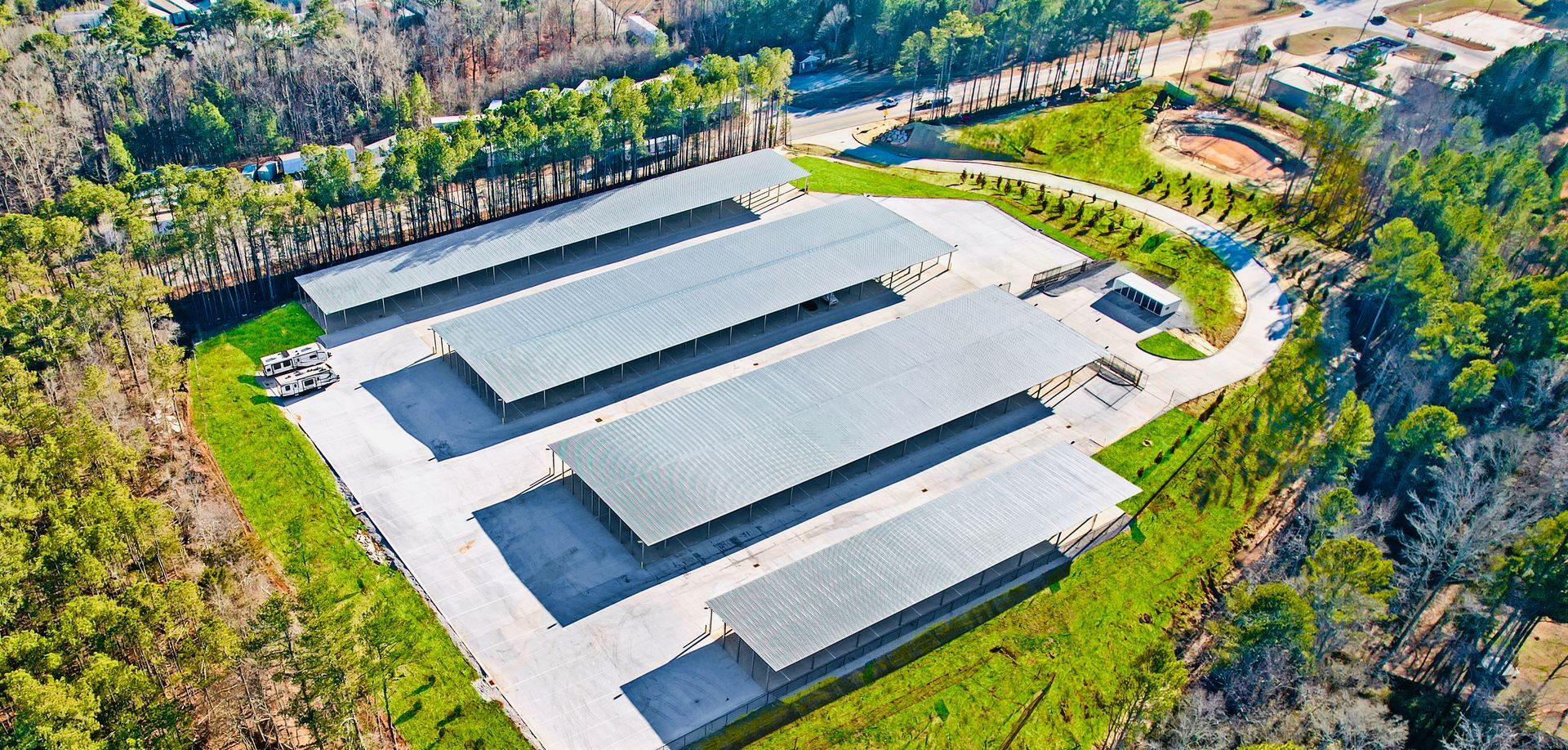
Oxford RV Storage accommodates campers of various sizes alongside RVs, boats, and cars. The facility has space for travel trailers and offers both outdoor and covered options.
Located in Oxford, GA along I-20, it's practical for camper owners on the east side of the Metro and those who frequently head east for camping trips. The rates typically run lower than inside-the-Perimeter options while providing appropriate security and access.