Covered Camper Storage vs Open Storage in Atlanta
The covered vs. open storage decision for campers comes down to simple math: what's the cost difference, what protection does covered storage provide, and how does that balance against your specific camper and usage pattern?
What Covered Storage Actually Provides
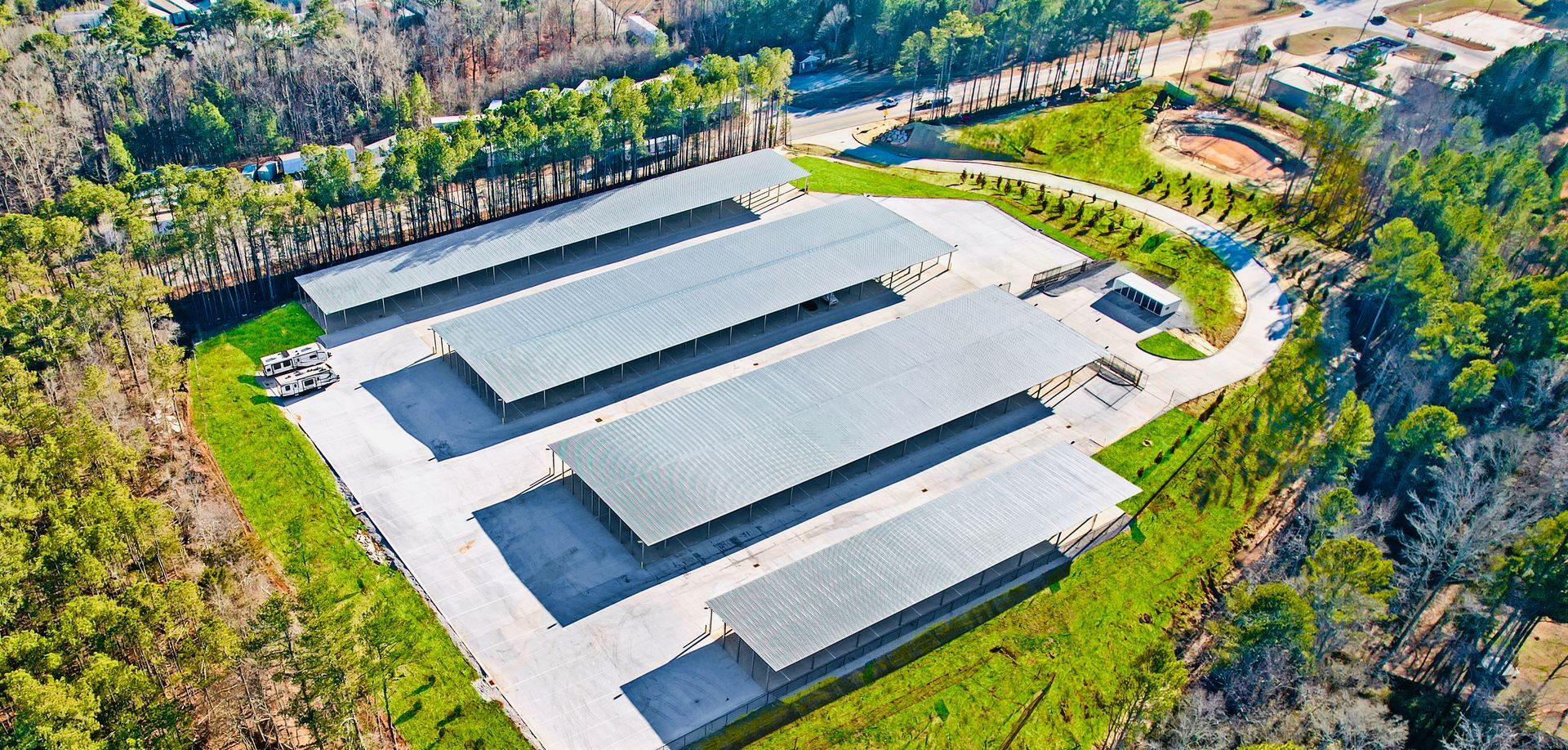
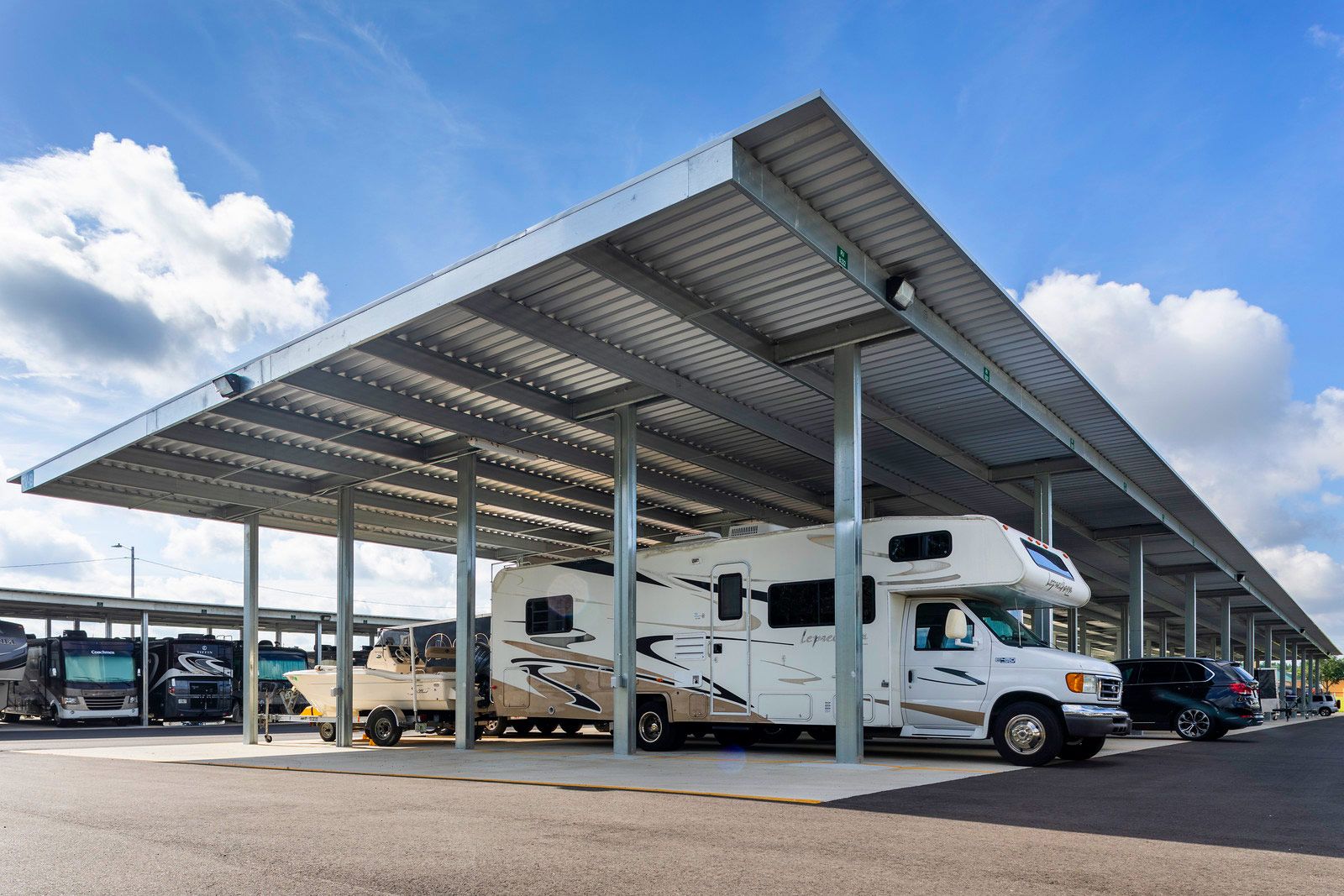
Covered storage typically means a metal roof structure over your parking space—like a carport. Sides may be open, partially enclosed, or fully enclosed depending on the facility.
Protection Against
Direct UV radiation:
- Prevents fading of exterior graphics and decals
- Protects roof membrane from sun degradation
- Reduces heat buildup in the camper
- Slows rubber and seal deterioration
Hail:
- Complete protection from hail damage
- Georgia averages 2-4 significant hail events per year
- Single hailstorm can cause $1,000-5,000+ in damage
Tree debris:
- Branches, leaves, and sap don't reach your camper
- Bird droppings land on the roof structure, not your camper
Rain (partially):
- No direct rain on top of the camper
- Horizontal/wind-driven rain may still reach the camper depending on side coverage
What Covered Storage Doesn't Provide
Climate control: Covered spaces get hot in summer—just not as hot as direct sun.
Humidity management: Air circulation is similar to outdoor storage.
Full weather enclosure: Unless the sides are also enclosed, you're still exposed to wind, dust, and humidity.
The Cost Difference
In the Atlanta Metro, covered storage typically costs 25-50% more than uncovered:
Example (24-foot travel trailer):
- Uncovered: $85/month
- Covered: $115/month
- Difference: $30/month, $360/year
Example (30-foot travel trailer):
- Uncovered: $110/month
- Covered: $150/month
- Difference: $40/month, $480/year
When Covered Storage Is Worth It
Your Camper Is Newer or High-Value
If you paid $35,000+ for your camper, $360-500/year for covered storage is a small percentage of your investment. The protection preserves value and appearance.
You Have Expensive Graphics or Wraps
Custom graphics and wraps fade and peel under UV exposure. Covered storage can double their lifespan.
You Store Through Summer Without Using
If your camper sits from May through September, that's 4-5 months of intense Georgia sun. Covered storage makes the most difference during this period.
You Plan to Keep the Camper Long-Term
The effects of sun damage compound over years. If you're keeping your camper for 7-10+ years, covered storage pays off in preserved condition.
You Want to Minimize Maintenance
Covered campers need less:
- Washing (less dirt, debris, bird droppings)
- Exterior treatment (slower UV degradation)
- Roof maintenance (less exposure stress)
- Seal attention (UV doesn't attack seals as aggressively)
Your Area Has Hail History
If you've seen hail damage to cars or homes in recent years, covered storage is cheap insurance against a known risk.
When Open Storage Works Fine
You Use the Camper Frequently
If you're taking the camper out every 2-3 weeks during camping season, it's not sitting long enough for serious UV damage. You're already washing it regularly.
Your Camper Is Older or Budget-Tier
A 12-year-old camper with existing sun fade doesn't benefit much from covered storage. The protection you'd be providing addresses damage that's already occurred.
You Have a Good Camper Cover
A quality fitted cover provides significant protection in open storage:
- Blocks UV
- Protects from debris and bird droppings
- Provides cushioning against minor hail
With a good cover, you get 60-70% of covered storage's protection at open storage prices plus the cover cost.
Budget Is the Primary Constraint
If covered storage means you can't afford storage at all, or have to choose between storage and actually using your camper, open storage is dramatically better than inadequate alternatives.
Short-Term Storage
Storing for 3-6 months? The cumulative damage from open storage is minimal over that timeframe.
The Height Consideration
Covered storage has height limits—typically 13-14 feet. Check your camper's actual height against the facility's clearance before assuming covered storage is available for your rig.
Measure:
- Overall height including AC units
- Any raised antennas or satellite dishes
- Height when fully settled on tires
Hybrid Approach
Some camper owners use different storage types seasonally:
Winter (November-March): Open storage is fine—UV is less intense, sun exposure shorter, hail is rare.
Summer (April-October): Covered storage during peak sun and storm season provides the most valuable protection.
If your facility allows switching, this captures most of covered storage's benefits at reduced annual cost.
Making the Decision
Questions to Ask Yourself
- How old is my camper, and how long do I plan to keep it?
- How often do I actually use it?
- Does my camper have vulnerable features (graphics, expensive roof, etc.)?
- What's the actual cost difference at facilities I'm considering?
- Am I willing to do the extra maintenance that open storage requires?
The Typical Conclusion
For most camper owners with rigs less than 10 years old who store through summer:
- Covered storage is worth it if the premium is under $50/month
- It's questionable at $50-75/month premium
- Probably not worth it above $75/month premium (consider a quality cover instead)
Oxford RV Storage Options
Oxford RV Storage offers both open and covered storage for campers and travel trailers. The facility can accommodate various camper sizes in both storage types.
Compare the covered and uncovered rates against your specific camper and usage pattern. The decision that's right for a frequently-used pop-up is different from what makes sense for a large fifth wheel stored seasonally.