Best Places to Store Your Vehicle During Georgia Winters
Georgia winters are mild compared to northern states, but that comparison often leads vehicle owners astray. "It doesn't get that cold" becomes the justification for skipping winterization—until a cold snap drops temperatures into the teens and water in unprotected systems freezes and cracks. Winter storage in Georgia requires appropriate preparation, even if it's not Minnesota-level intensive.
Understanding Georgia Winters
What to Expect
Typical conditions (Atlanta area):
- Average winter lows: 30-35°F
- Several nights per season below 20°F
- Occasional nights in the teens
- Rare but possible single-digit temperatures
- Extended cold snaps (2-4 days below freezing) every few years
What this means:
- Water will freeze multiple times per winter
- Vehicles need freeze protection
- Not as aggressive as northern storage, but not ignorable
The Risk
One hard freeze can:
- Crack engine blocks
- Destroy water pumps
- Split plumbing in RVs and campers
- Damage water heaters
- Ruin boat engines
The repairs often exceed $1,000-5,000+. Winter preparation costs $20-150.
Vehicle Types and Winter Needs
Cars and Trucks
Winter concerns:
- Battery health (cold reduces capacity)
- Fluid condition (older fluids lose protection)
- Tire pressure (drops in cold)
- General starting reliability
Preparation:
- Battery check/maintainer
- Fresh antifreeze mix (verify protection to -20°F)
- Appropriate oil for cold weather
- Fuel stabilizer if storing over 30 days
RVs and Campers
Winter concerns:
- Water system freeze damage (major risk)
- Battery drain
- Rodent intrusion (seeking warmth)
- Roof/seal integrity during freeze-thaw cycles
Preparation:
- Full winterization of water system (see below)
- Battery disconnect or maintainer
- Rodent prevention measures
- Roof/seal inspection
Boats
Winter concerns:
- Engine freeze damage (critical)
- Water system freeze damage
- Battery health
- Fuel degradation
Preparation:
- Engine winterization (run antifreeze through cooling)
- Drain/winterize freshwater systems
- Fuel stabilizer
- Battery maintenance
Winterization Essentials
Water System Winterization (RVs/Boats)
Drain-only method:
- Drain all fresh water tanks
- Open all faucets
- Drain water heater
- Leave faucets cracked open
Limitation: Residual water in low points can still freeze. Risky for hard freezes.
Full antifreeze method (recommended):
- Drain fresh water system
- Bypass water heater
- Run RV antifreeze through all faucets until pink
- Add antifreeze to drains and holding tanks
Cost: $10-20 in antifreeze
Engine Winterization (Boats)
- Flush with fresh water
- Run antifreeze through cooling system
- Fog engine (optional but recommended)
- Stabilize fuel
Cost: DIY $20-40; Professional $150-300
Battery Winter Care
Cold reduces battery capacity. A marginal battery in summer may fail completely in winter.
Preparation:
- Test battery before winter
- Use a maintainer or disconnect
- For batteries removed: store in cool (not freezing) location
Storage Location Options
Outdoor Uncovered
Winter considerations:
- Full exposure to cold and weather
- Ground can become muddy or icy
- Vehicle needs full winterization
Appropriate when:
- Vehicle is fully winterized
- Budget is primary concern
- Vehicle is frequently used
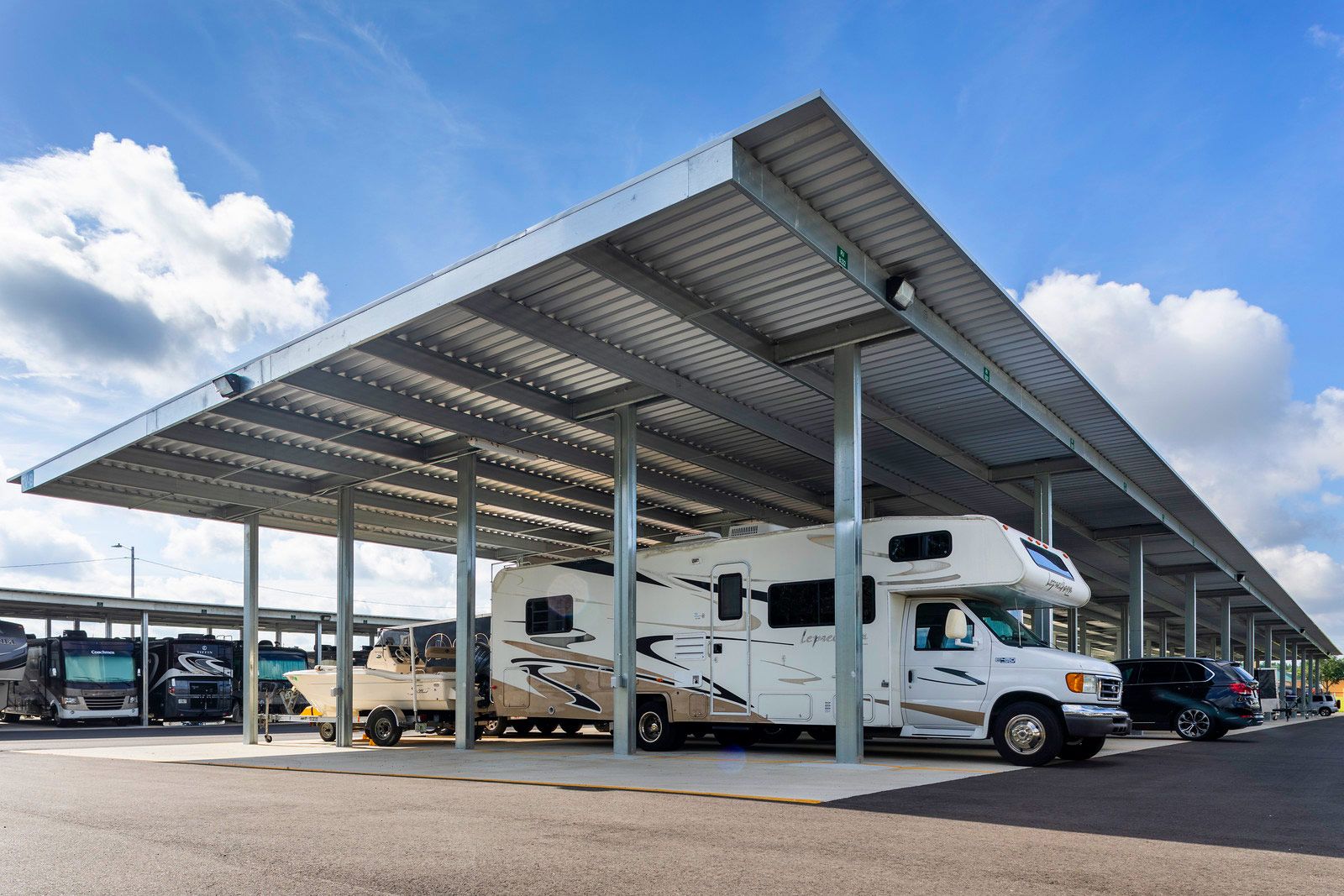
Covered Storage
Winter considerations:
- Protected from precipitation
- Still exposed to cold temperatures
- Still requires full winterization
Appropriate when:
- Want protection from ice/snow accumulation
- Vehicle sits for extended periods
- Reasonable budget available
Indoor (Non-Climate-Controlled)
Winter considerations:
- Temperature fluctuates but more stable than outdoor
- Protected from precipitation entirely
- Still gets cold; still requires winterization
Appropriate when:
- Want maximum protection without climate control cost
- Vehicle is valuable enough to justify indoor cost
Climate-Controlled Indoor
Winter considerations:
- Temperature maintained above freezing
- May not require full winterization (but still recommended)
- Premium cost
Appropriate when:
- Storing high-value or collector vehicles
- Want to skip winterization (still drain water systems)
- Budget allows
Where to Find Winter Storage in Atlanta
General Vehicle Storage Facilities
Most facilities operate year-round. Winter demand is often lower than summer, which may mean better availability or negotiation opportunity.
What to look for:
- Good drainage (avoid muddy lots)
- Covered options available
- Accessible during winter weather events
RV-Specific Facilities
Purpose-built for RVs and larger vehicles. Staff often understand winterization needs.
What to ask:
- Do you have covered spaces available?
- Any winterization services or recommendations?
- Access during ice/snow events?
I-20 Corridor (Oxford Area)
Facilities in Conyers, Covington, and Oxford typically have:
- More space and better drainage than cramped urban lots
- Lower costs than inside-I-285 facilities
- Purpose-built RV/vehicle storage options
The slightly rural location can actually be an advantage in winter—less traffic, simpler access, more predictable conditions.
Timing for Winter Storage
Fall Preparation (October-November)
- Complete winterization before first hard freeze
- Don't wait until freeze is forecast—do it early
- Confirm storage space availability
During Winter
- Check on vehicle periodically if possible
- Monitor for any issues (leaks, pest intrusion)
- Battery maintainer check
Spring De-Winterization (March-April)
- Flush antifreeze systems
- Check for any winter damage
- Test all systems before using
Oxford RV Storage for Winter
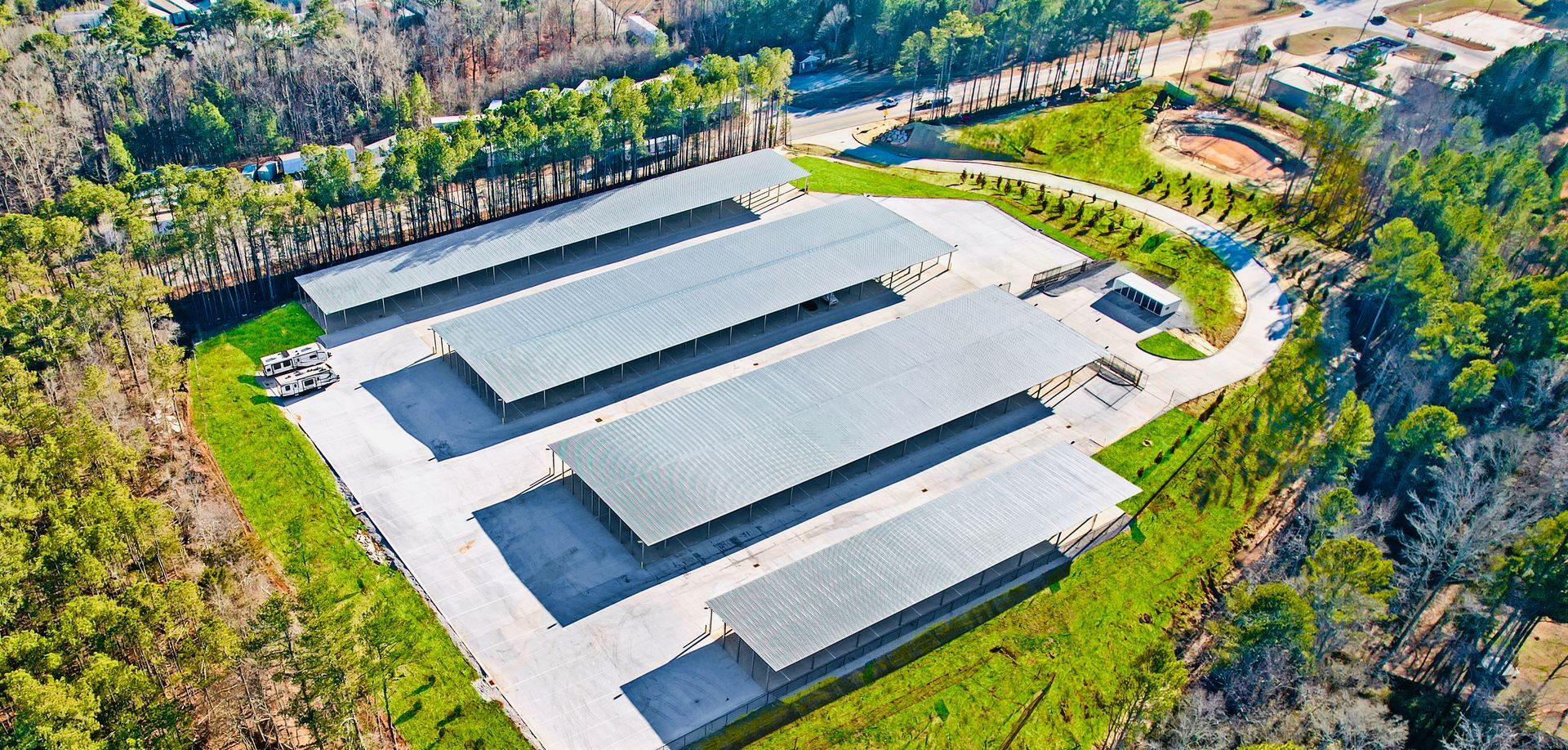
Oxford RV Storage stores vehicles through Georgia winters with outdoor and covered options. The facility provides secure storage; winterization and preparation are the owner's responsibility.
For RV and camper owners, winter storage with proper winterization prevents the expensive freeze damage that catches many Georgia RV owners off guard.