Best RV Storage Facilities in the Atlanta Metro
RV storage in metro Atlanta runs the full spectrum from sketchy gravel lots with a chain-link fence to climate-controlled buildings that cost more per month than some apartments. The "best" facility depends entirely on what you're storing, how often you use it, and where you live.
A 45-foot Class A diesel pusher has completely different requirements than a 19-foot travel trailer. The Class A owner probably needs pull-through access, 14+ foot height clearance, and enough turning radius that they're not doing a 47-point turn to get in and out. The travel trailer owner mostly just needs a space long enough that they're not blocking the aisle.
What RV Storage Actually Involves
Most RV owners in the Atlanta Metro use their rigs less than 30 days per year. The rest of the time, the RV sits. Your storage choice determines whether it sits safely and stays in good condition, or whether you're dealing with sun damage, flat tires, rodent infestations, or worse.
Storage facilities offer three basic types of space:
Uncovered outdoor — Your RV sits in an open parking space, exposed to everything. This is fine for regular use (you're taking it out every few weeks) but problematic for seasonal storage. Georgia sun will fade graphics, crack rubber seals, and cook your interior over time.
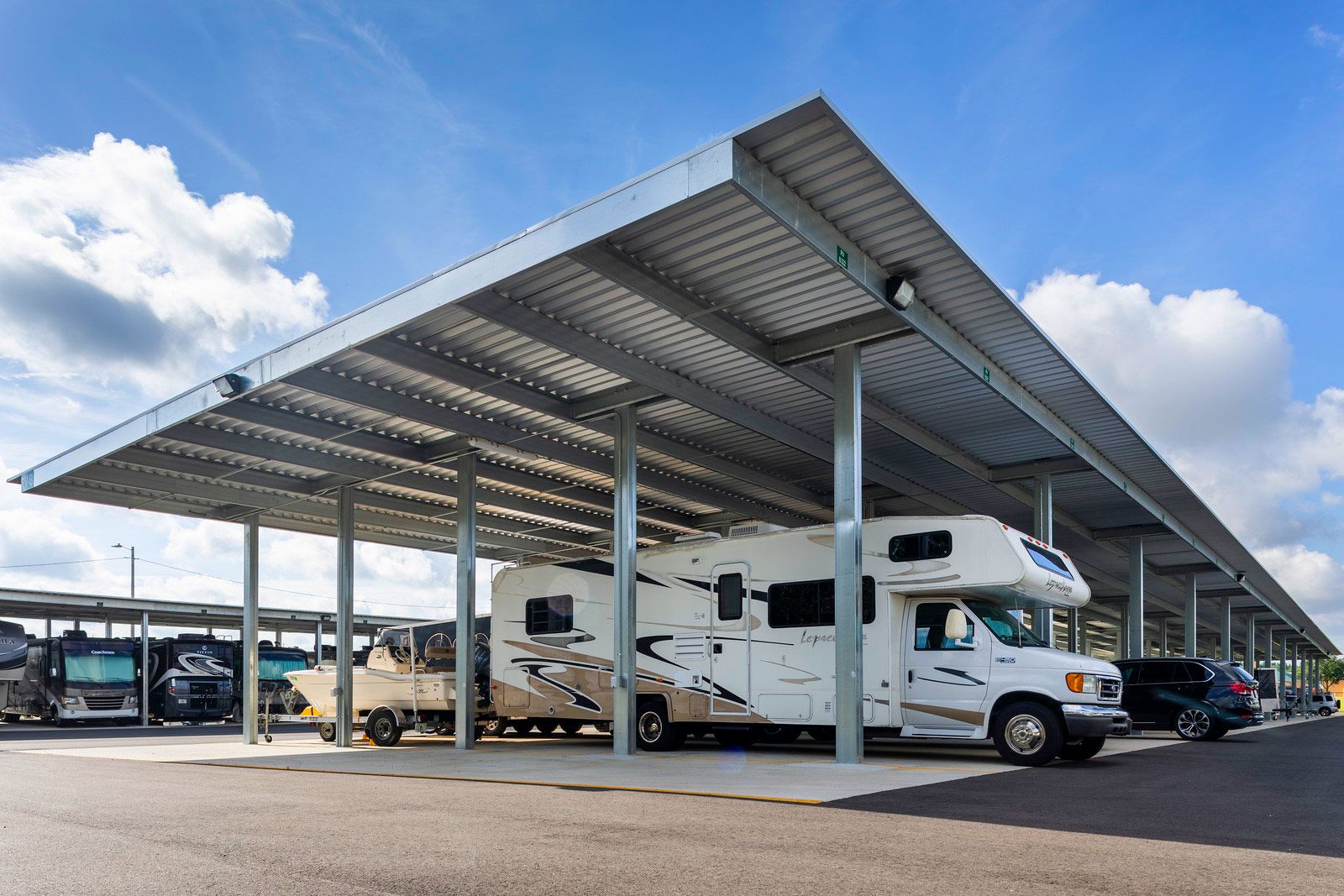
Covered parking — A roof overhead, open sides. This is the sweet spot for most RV owners. You're protected from direct sun and hail, which eliminates the two biggest damage risks, while still paying reasonable rates.
Enclosed indoor — Full building protection. Usually reserved for high-end motorhomes or owners who want maximum protection. Costs 2-3x what covered parking costs.
The Space Problem
RVs are big, and Atlanta doesn't have unlimited cheap land. That creates a supply constraint that pushes prices up and availability down, especially in desirable areas.
Inside I-285, RV storage options are limited and expensive. Most facilities that exist are older, built when the area was less developed, and they're often surrounded by commercial or residential development that creates access headaches.
Outside the Perimeter, particularly along the I-20 corridor east of Atlanta, you'll find more purpose-built RV storage facilities with appropriate space for larger rigs. The trade-off is distance—you might drive 30-45 minutes to reach your RV.
For most RV owners, that drive time is irrelevant. You're not visiting the storage facility daily. You go there before a trip to prep, and you return after a trip to store. If that's happening 5-10 times per year, an extra 20 minutes each way matters far less than quality and security.
Evaluating Facilities
Physical Layout
Visit in person if at all possible. Drive your RV there if you have it, or at least drive your tow vehicle to assess:
- Turning radius — Can you maneuver without hitting anything?
- Height clearance — Covered facilities need 13-14 feet minimum for most Class A and fifth wheel rigs
- Space width — Can you open your RV's doors and awning without hitting your neighbor?
- Surface quality — Is the ground stable? Does it flood?
Many facilities look fine in photos but become problematic when you actually try to park a 40-foot motorhome.
Security Features
RVs represent significant value—$30,000 to $300,000+ for motorhomes—and they're full of stealable items. Security matters.
Look for:
- Perimeter fencing — 6+ feet tall, in good repair, no obvious gaps
- Gate access control — Individual codes or cards, not a shared key
- Lighting — Full lot coverage, not just near the office
- Camera coverage — Ask if cameras are monitored or just recording
Access Hours
Some RV owners want 24/7 access because they like leaving at 5 AM for a trip. Others never need evening or weekend access. Confirm the facility's hours match your actual usage pattern.
What's Included
Some facilities include basic services; others charge for everything extra:
- Dump station access
- Fresh water fill
- Electrical hookups (for battery charging)
- On-site propane
- Wash stations
These aren't deal-breakers, but knowing what's available helps you plan.
Pricing in the Atlanta Metro
Expect significant variation based on location, rig size, and storage type:
- Uncovered outdoor: $75-175/month for typical travel trailers; $150-300/month for Class A motorhomes
- Covered parking: $125-250/month for trailers; $200-400/month for large motorhomes
- Enclosed indoor: $250-500+/month
These ranges are rough—specific facilities vary based on demand, amenities, and location. Facilities inside I-285 generally charge more; those farther out typically charge less for equivalent space.
Many facilities offer discounts for prepaying 6-12 months or for long-term commitments. If you know you'll need storage for years, ask about annual rates.
Before You Store
- Clean the exterior — Remove road grime, bugs, and any organic matter that will bake on in the sun
- Empty holding tanks — Don't store with waste in your tanks
- Check seals and seams — Small gaps become big leaks if left all season
- Disconnect batteries or use a maintainer — Dead batteries are the #1 post-storage problem
- Rodent prevention — Close all openings, consider mothballs or electronic repellents, avoid storing food
- Cover tires if in direct sun — UV destroys sidewalls faster than miles do
Oxford RV Storage
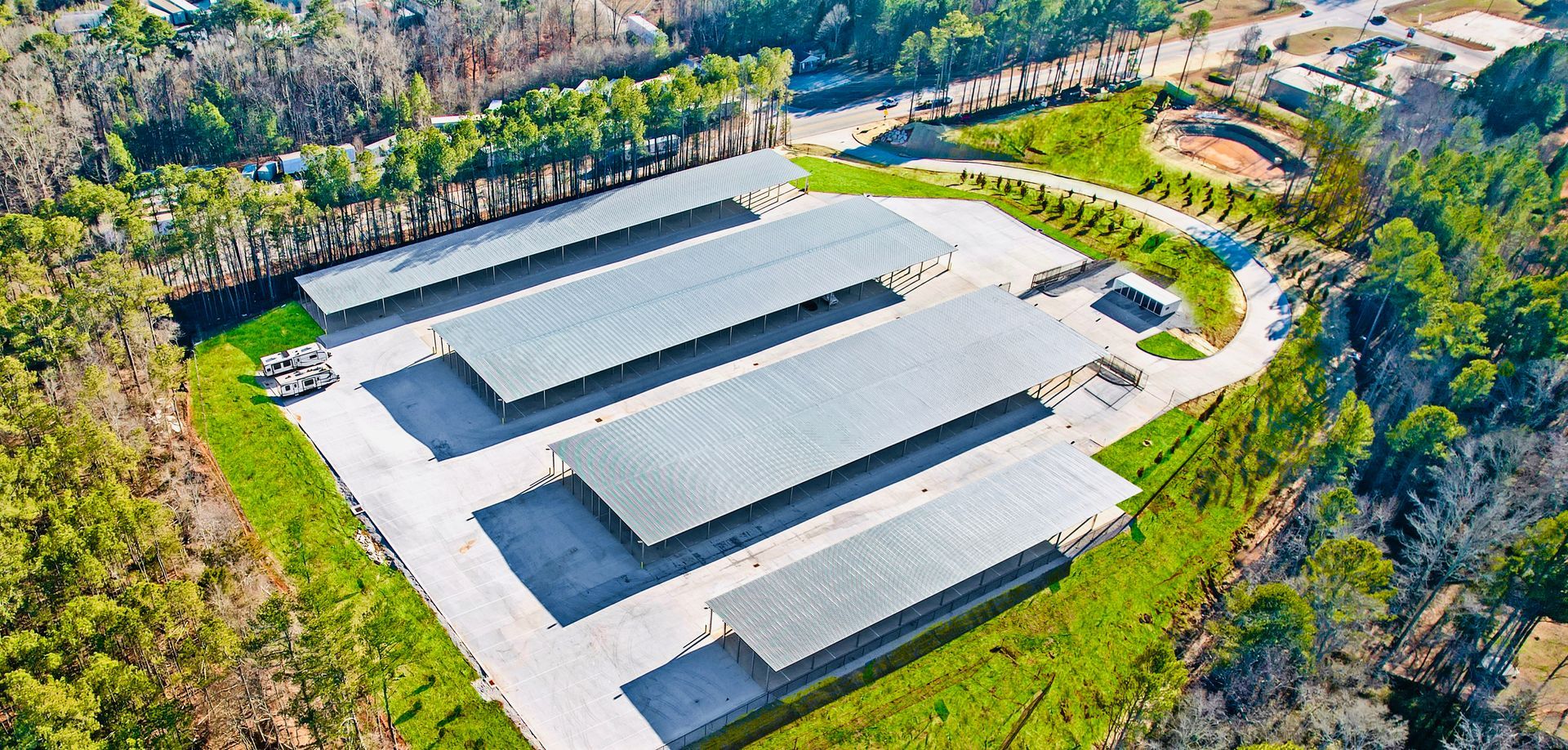
Oxford RV Storage is a purpose-built facility on the east side of the Atlanta Metro, designed specifically for RVs, boats, and trailers. Located off I-20 in Oxford, GA, it serves owners from Conyers, Covington, Lithonia, Stonecrest, and the surrounding area.
The facility offers outdoor and covered storage with space for larger rigs, gated access, and on-site lighting. If you're evaluating options on the east side of the Metro, it's worth comparing directly against other facilities in the area.