Secure Storage for Trailers and Flatbeds Near Atlanta
Utility trailers, flatbeds, and equipment trailers present a specific storage challenge: they're valuable targets for theft (easy to hook up and tow away), they're often loaded with equipment worth more than the trailer itself, and they don't fit in most residential situations. Secure storage isn't optional—it's essential.
The Theft Reality
Trailers are among the most-stolen vehicle types. They're attractive targets because:
Easy to steal: Hook up to any truck with the right hitch, drive away. No keys needed for the trailer itself.
Hard to identify: Many trailers lack VINs or have them in hidden locations. Recovery rates are low.
Valuable cargo: Equipment on the trailer is often worth more than the trailer. Thieves know this.
Resale market: Stolen trailers get repainted and sold. Equipment gets pawned or sold online.
The Atlanta Metro has significant trailer theft. Contractors especially lose trailers from job sites, driveways, and unsecured storage.
What "Secure" Actually Means for Trailers
The Minimums
Gated access: Individual codes or cards, not shared keys. Gate should close promptly after entry.
Perimeter fencing: 6+ feet, no obvious gaps, in good repair.
Lighting: Full lot coverage, not just the office area.
Your own measures: Even in secure storage, use hitch locks and wheel locks.
Better Security
Camera coverage: At gates and throughout the lot. Helps with identification if theft occurs.
Active monitoring or patrols: Someone paying attention, not just passive cameras.
Limited access: Fewer people with gate codes means lower risk.
Ideal Security
Separate trailer/equipment section: Some facilities have areas specifically for high-value trailers.
On-site management: Someone present deters crime.
Insurance requirements: Facilities that require proof of insurance tend to have better overall management.
Types of Trailers and Their Needs
Utility Trailers (Landscape, General Purpose)
Typically 5×8 to 6×12 feet. Used by homeowners and small contractors.
Storage needs:
- Basic outdoor space is usually sufficient
- Security matters more than weather protection
- Need room to maneuver backing in
Equipment/Construction Trailers
Carry tools, equipment, generators, compressors. High theft target.
Storage needs:
- Maximum security priority
- Ideally gated and locked on the trailer itself
- Consider facilities used by other contractors
Flatbed Trailers
Various sizes from small car haulers to 40+ foot gooseneck flatbeds.
Storage needs:
- Appropriate space length
- Room to maneuver with long trailers
- Ground condition matters (heavy loads need solid surfaces)
Enclosed Trailers
Cargo trailers, tool trailers, mobile workshops.
Storage needs:
- Already have some weather protection
- Security still essential
- Height clearance for covered storage
Finding Appropriate Storage
Where to Look
RV/boat storage facilities: Often have trailer spaces as part of their offering. Purpose-built for vehicle storage with appropriate security.
Industrial/commercial yards: Some cater specifically to contractors and businesses. Can be excellent or sketchy—inspect carefully.
Self-storage with outdoor spaces: Mixed results. Some are well-run; others are primarily for household storage and treat vehicles as an afterthought.
Questions to Ask
- What security measures do you have in place?
- What other trailers are stored here? (A mix of contractor trailers suggests others trust the facility)
- Has the facility had trailer thefts? How were they handled?
- What are the access hours?
- Can I use my own locks on top of facility security?
Red Flags
- Gate frequently open or broken
- No cameras or obviously fake cameras
- Shared access code for everyone
- Abandoned-looking vehicles in the lot
- Manager can't answer basic security questions
Your Own Security Measures
Even in a secure facility, add your own protection:
Hitch locks: $25-100. Prevents easy hookup.
Wheel locks/boots: $50-150. Immobilizes the trailer.
Coupler locks: Covers the coupler; can't be hitched.
GPS trackers: $50-300 plus subscription. Help recovery if stolen.
Unique identification: Weld on your own ID. Etch VIN in multiple hidden locations. Makes resale harder.
Insurance: Make sure your policy covers the trailer and contents when stored off-property.
Costs in the Atlanta Metro
Small utility trailers (under 12 ft): $50-100/month
Mid-size trailers (12-20 ft): $75-125/month
Large trailers/flatbeds (20+ ft): $100-200/month
Enclosed trailers: Similar to open trailers of same length
Location affects pricing. Facilities outside I-285 typically cost 20-30% less than close-in options.
Oxford RV Storage for Trailers
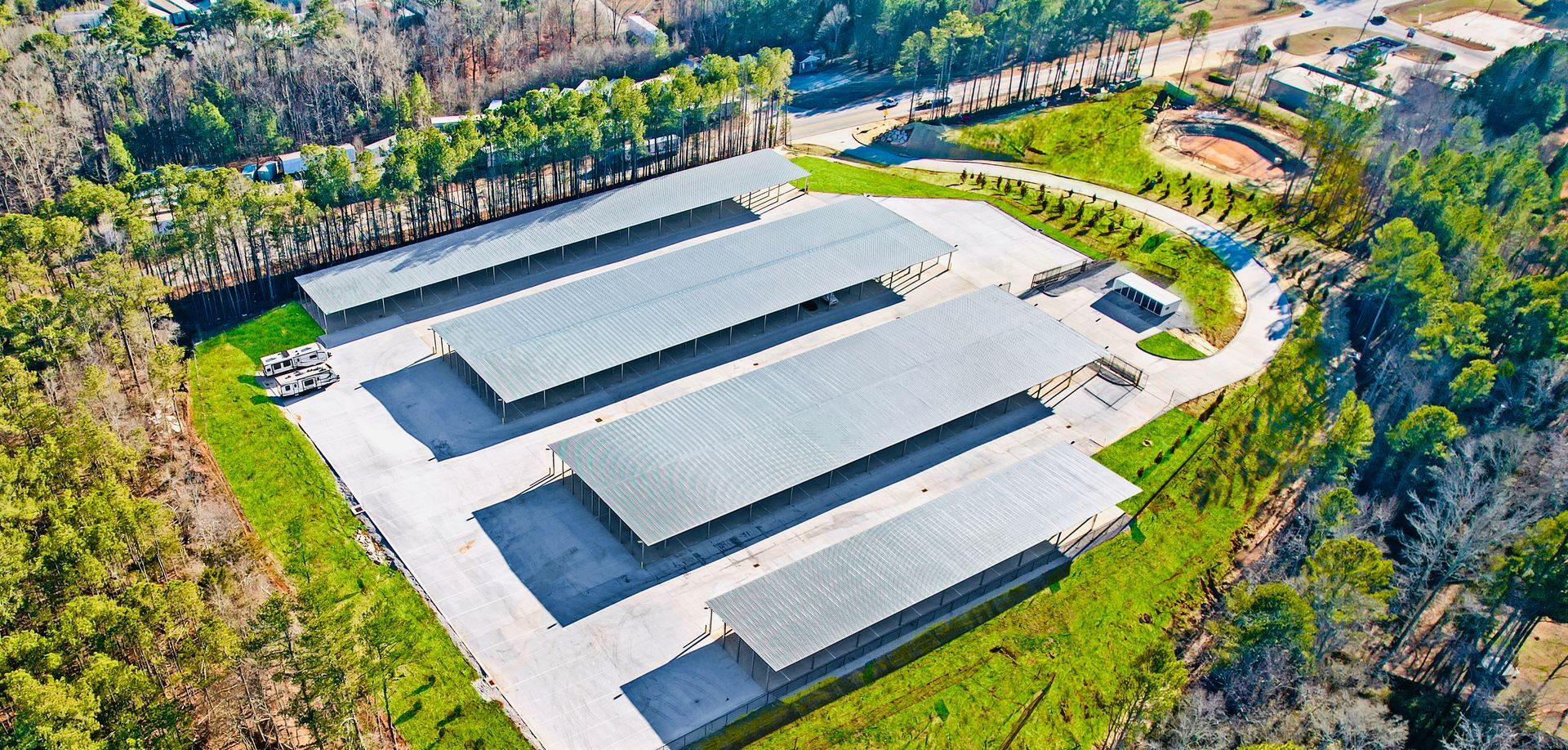
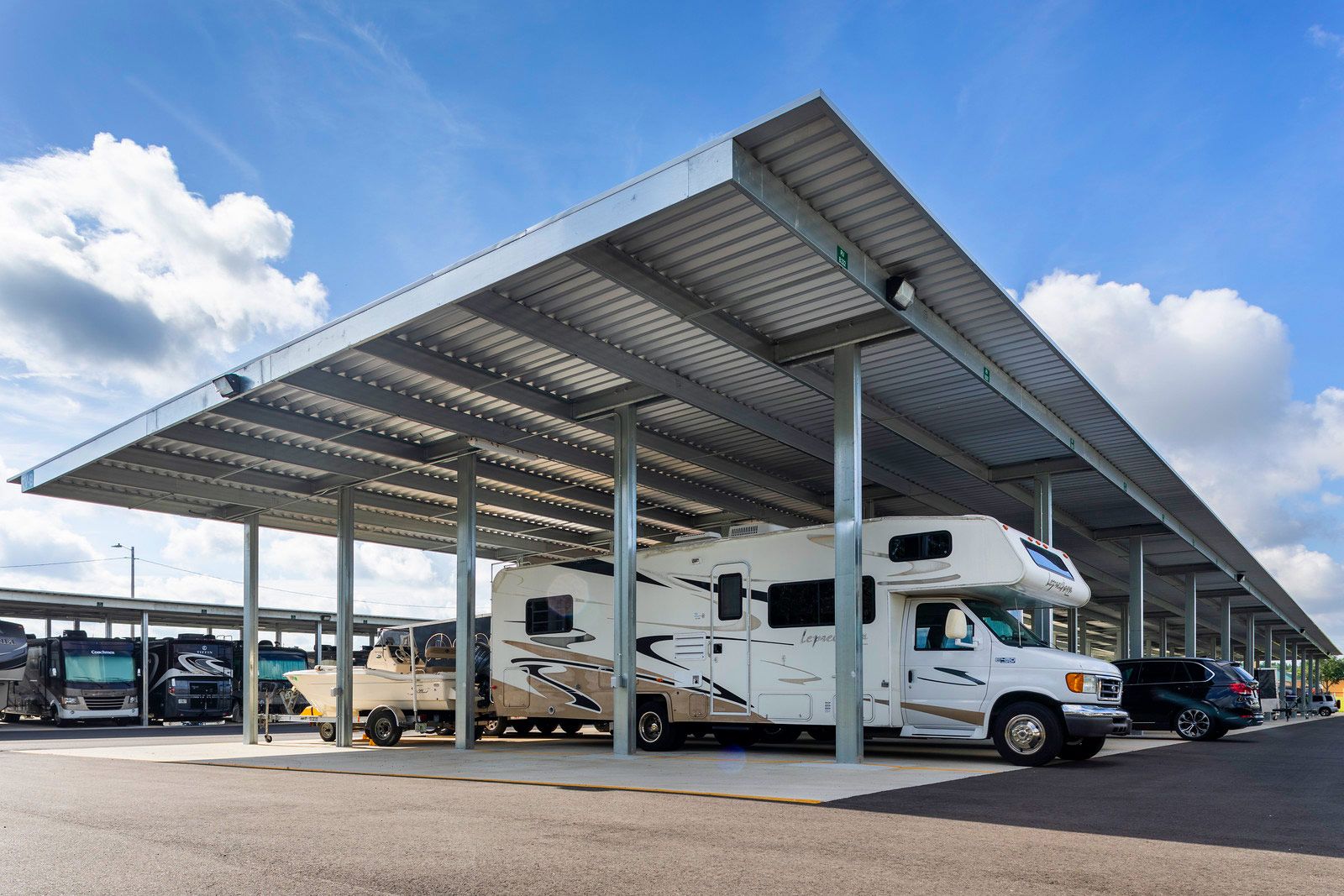
Oxford RV Storage accommodates utility trailers, flatbeds, and equipment trailers alongside RVs, boats, and cars. The facility offers gated access with individual codes and is designed for vehicle storage, not converted from another use.
Located in Oxford, GA along I-20, it serves contractors and businesses on the east side of the Metro. The pricing is typically competitive with other east-Metro options while providing appropriate security for trailer storage.