Best Car Storage Options in Atlanta Metro for Long-Term Parking
Long-term car storage means different things to different people. A military family deploying overseas for 18 months has completely different needs than a snowbird heading to Florida for four months. Before you start comparing facilities, figure out what "long-term" actually means for your situation.
In the Atlanta Metro, most storage facilities define long-term as anything over 30 days. Some offer discounted rates starting at 3 months, while others require 6-month minimums for their best pricing. The sweet spot for most people falls between 3 and 12 months—long enough that monthly storage fees add up, but short enough that you'll actually want the car back in reasonable condition.
The Three Main Storage Types and What They Actually Cost
Outdoor Uncovered Storage
This is the most common option and usually runs between $50 and $150 per month depending on location and lot quality. Your car sits in an open parking space, exposed to weather but protected by perimeter fencing and gate access.
The trade-off is straightforward: you save money but accept more risk from sun damage, hail, and pollen accumulation. For a 10-year-old commuter car you're storing while traveling, this makes perfect sense. For a newer vehicle or anything you care about cosmetically, it's a gamble.
In Georgia specifically, the bigger concern isn't rain—it's UV exposure. Six months of direct Atlanta sun will noticeably fade dark paint and can crack dashboard plastics if you don't use a windshield shade or full car cover.
Covered Storage
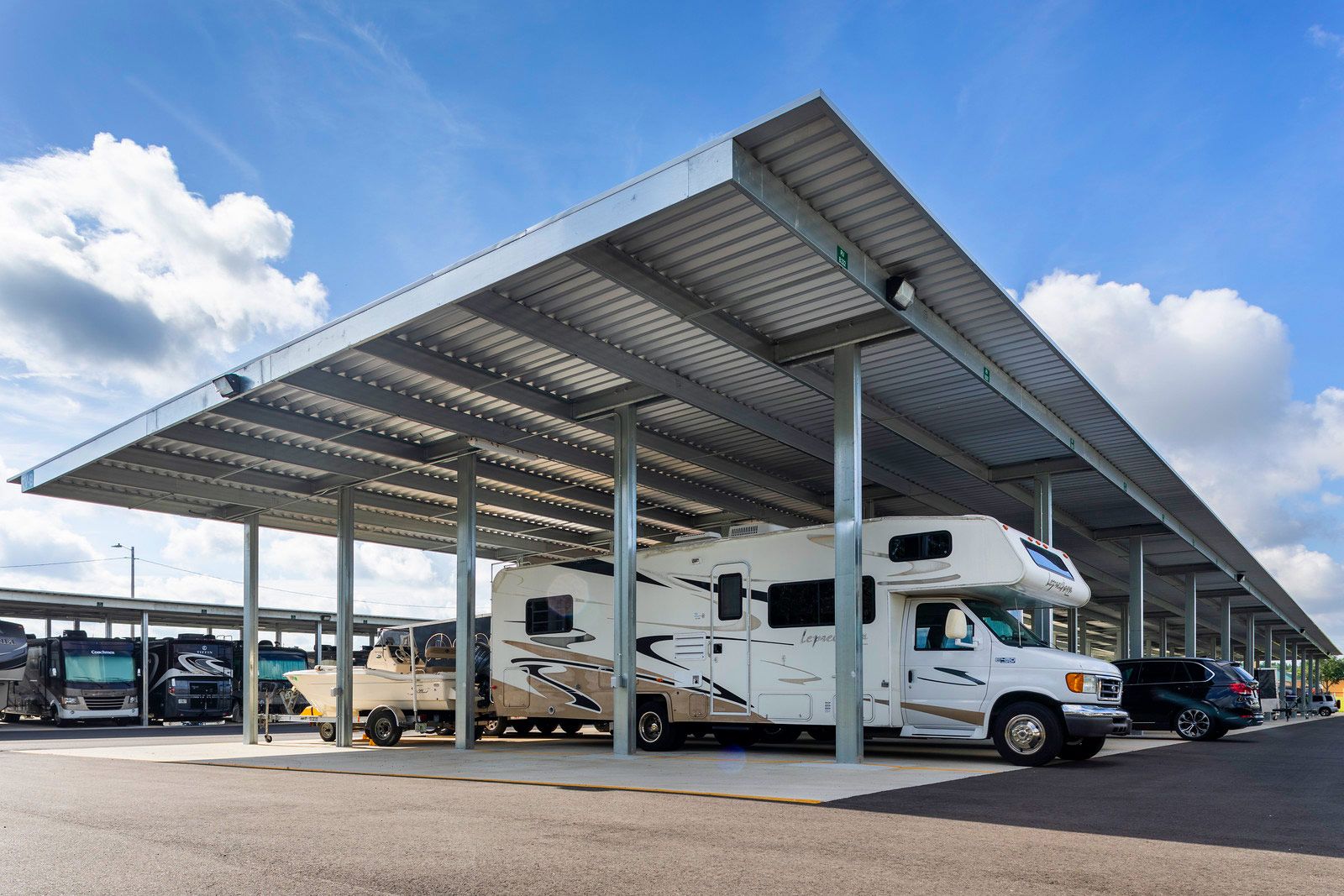
Covered parking typically costs $100 to $200 per month. You get a roof overhead (usually a metal carport-style structure) but open sides. This eliminates direct sun exposure and protects against hail, which matters more than most people realize.
Georgia averages 2-3 significant hail events per year, usually in spring. If your car is sitting in uncovered storage from March through May, you're rolling dice with a $500-$3,000 insurance deductible.
Covered storage is the practical middle ground for most long-term situations. You're protected from the two biggest threats (sun and hail) without paying indoor storage prices.
Fully Enclosed Indoor Storage
Indoor units run $150 to $400+ per month, varying wildly based on facility quality and whether climate control is included. Your car is completely enclosed, typically in a warehouse-style building or individual garage bay.
This makes sense for classic cars, collectibles, or anything worth over $50,000. For a daily driver, the math rarely works out—you'll spend more on storage over 12 months than you would fixing any realistic weather damage.
What Actually Happens to Cars in Long-Term Storage
Most people worry about the wrong things. Theft is statistically rare at legitimate gated facilities. The real problems are mechanical:
Battery death is nearly guaranteed after 2-3 weeks without driving. Plan on either disconnecting the battery (which resets your radio presets and may trigger anti-theft systems) or using a battery maintainer if the facility allows it.
Flat spots on tires develop after 30+ days of sitting in one position, especially in hot weather. These usually work themselves out after 15-20 miles of driving, but severe flat spots can be permanent. Over-inflating tires slightly before storage helps.
Fuel degradation starts around the 30-day mark with ethanol-blend gasoline. Add fuel stabilizer before storing, and fill the tank completely—a full tank prevents moisture condensation inside.
Brake rotor rust is cosmetic and burns off within the first few brake applications. Don't panic when you see orange rotors after storage.
Evaluating Atlanta Metro Facilities
Location matters more than most people think. The cheapest facility is useless if it adds 45 minutes to your trip to the airport. Think about where you'll actually be when you need to drop off or pick up the car.
Facilities along the I-20 corridor east of Atlanta (Conyers, Covington, Oxford) often cost 20-30% less than comparable options inside the Perimeter while being more convenient for anyone living on the east side or traveling that direction.
When visiting a facility, pay attention to:
- Gate response time — A slow gate that stays open for 30 seconds invites tailgating
- Surface quality — Gravel is fine, but deep potholes or muddy areas suggest poor drainage
- Other vehicles — A mix of well-maintained RVs, boats, and cars indicates responsible ownership; a lot full of abandoned-looking vehicles is a red flag
- Lighting coverage — Walk the property after dark if you can
Preparing Your Car for Storage
- Wash the exterior thoroughly, including wheel wells where road salt and brake dust accumulate
- Clean the interior and remove all food, even sealed items that might attract rodents
- Change oil only if you're due—fresh oil doesn't protect any better during storage
- Fill the gas tank and add fuel stabilizer
- Check tire pressure and add 3-5 PSI above normal
- Decide on battery strategy: disconnect, maintainer, or accept that you'll need a jump
- Consider a breathable car cover for outdoor or covered storage
- Take dated photos of the car's condition
Oxford RV Storage
Oxford RV Storage accommodates long-term car storage alongside RVs, boats, and trailers. Located just off I-20 in Oxford, GA, the facility serves drivers from across the east side of the Metro who want secure storage without fighting traffic into Atlanta.
The site offers outdoor and covered options with gated access and on-site lighting. For drivers in Conyers, Covington, Stonecrest, or anyone regularly traveling I-20, it's worth checking availability and rates against closer-in facilities.