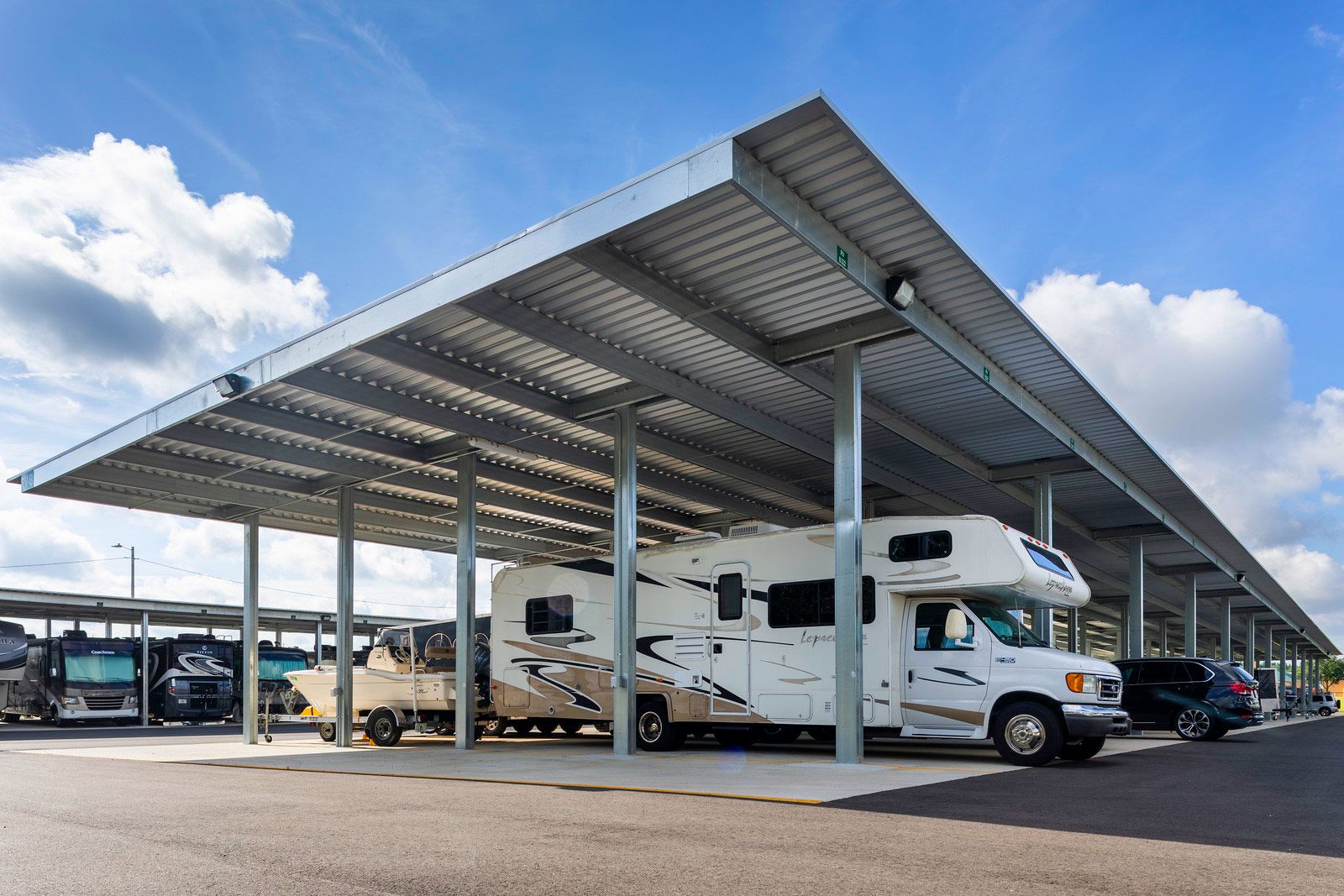
What Insurance You Need for Stored Vehicles in Atlanta
Here's something most people discover too late: storing your vehicle doesn't automatically mean your insurance still covers it, and your storage facility almost certainly isn't covering it either. The gap between what people assume and what's actually protected has cost vehicle owners thousands of dollars in uninsured losses.
What Storage Facilities Actually Cover
Almost nothing, in most cases.
Standard storage rental agreements explicitly disclaim liability for damage to or theft of your vehicle. Read the contract you signed (or will sign). There's nearly always language that says something like: "Facility assumes no responsibility for loss or damage to stored property."
This isn't the facility being shady—it's standard industry practice. Storage facilities provide space, security measures, and access. They don't provide insurance coverage for your stuff.
Some facilities offer optional storage insurance as an add-on. This might cost $10-30/month and provide limited coverage (often $5,000-15,000) for theft or damage. It's better than nothing but usually doesn't provide full replacement value.
What Your Auto Insurance Covers
This is where it gets complicated. Coverage depends on:
What type of policy you have:
- Liability only: Covers damage you cause to others, not your own vehicle. Provides zero protection for a stored vehicle.
- Comprehensive coverage: Covers non-collision damage (theft, hail, fire, vandalism). This is what protects stored vehicles.
Policy terms about vehicle use: Some policies require the vehicle to be used regularly (driven a certain number of miles) or stored at a specific location. Storing a car off-site for months without driving it might technically violate your policy terms, though this is rarely enforced.
"Storage" vs. "registered" status: Some states allow you to officially put a vehicle in "storage" status (suspended registration). Georgia doesn't have a formal storage status, so your vehicle should stay registered and insured to maintain coverage.
The Common Scenarios
Scenario 1: Your car is stolen from storage
Comprehensive coverage should cover this, minus your deductible. File a police report immediately, then a claim with your insurer. The storage facility's liability is typically zero unless you can prove gross negligence (they left the gate open overnight, etc.).
Scenario 2: Hail damage while stored outside
Comprehensive coverage handles this too. This is actually a common claim in Georgia—spring hailstorms can destroy cars in unprotected storage. Your deductible applies.
Scenario 3: Someone hits your parked car
If identifiable, the other party's liability insurance should cover it. If it's a hit-and-run, you'd claim against your own collision coverage (if you have it) or uninsured motorist property damage coverage.
Scenario 4: Vandalism
Comprehensive covers vandalism. Again, the facility isn't liable unless they were negligent.
Scenario 5: Fire destroys your vehicle
Comprehensive covers fire. Whether the fire started from your vehicle, another vehicle, or the building doesn't matter for your coverage.
RVs and Boats: Different Policies
Standard auto insurance doesn't cover RVs or boats. You need:
RV insurance: Similar structure to auto insurance (liability, collision, comprehensive) but specifically for motorhomes, fifth wheels, and travel trailers. Coverage for personal items inside the RV varies by policy.
Boat insurance: Covers the hull, motor, and usually equipment. Some policies include liability for accidents on the water.
These policies have their own terms about storage. Some offer discounts when the RV or boat is in storage (since you're not using it and can't cause accidents). Others require notification when the vehicle enters long-term storage.
Read your policy or call your agent. RV and boat policies vary more than standard auto policies.
How to Avoid Coverage Gaps
- Keep comprehensive coverage active — Dropping to liability-only while storing saves money but eliminates the coverage you actually need. The risk isn't from driving; it's from theft, weather, and vandalism.
- Notify your insurer about storage — You don't have to, but it's worth doing. Some insurers offer storage discounts. At minimum, you'll have documentation that you informed them.
- Verify the storage location is acceptable — Some policies require vehicles to be stored at your residence or a "secured" facility. Off-site storage is almost always fine, but confirming avoids potential disputes.
- Check facility insurance options — If your own coverage is limited, facility-provided insurance might fill gaps. It's usually not worth it if you have good comprehensive coverage.
- Document vehicle condition before storage — Take dated photos and note mileage. If you need to file a claim, documentation helps establish the vehicle's pre-storage condition.
- Review coverage limits — Make sure your policy limits are high enough to actually replace your vehicle. A 10-year-old truck needs less coverage than a new Class A motorhome.
The Cost Equation
Maintaining comprehensive coverage on a stored vehicle typically costs $20-50/month for cars, more for RVs and boats. That's $240-600/year for protection against events that could cost $10,000-100,000+ to fix.
People who drop coverage to save money are essentially betting nothing bad will happen. Sometimes they win that bet. Sometimes a hailstorm or theft changes the math dramatically.
Oxford RV Storage and Insurance
Oxford RV Storage provides secure storage, but like virtually all storage facilities, doesn't provide insurance for stored vehicles. The facility offers gated access, lighting, and security measures to reduce risk, but you're responsible for your own insurance coverage.
Before storing, confirm your insurance situation. Call your provider, review your policy, and make sure you're actually protected.