A Complete Guide to Storing Work Trucks in Atlanta
Work trucks create a specific storage challenge that personal vehicles don't: they're too big for residential driveways, neighbors complain if they're parked on the street, but they need to be accessible every morning. The contractor with a one-ton service body truck and a 20-foot trailer doesn't have many good options at home.
This guide covers off-site storage specifically for work vehicles—what's different about commercial needs, how to evaluate options, and the business considerations that affect where and how you store.
Why Work Trucks End Up in Storage
Residential restrictions — Most Atlanta-area subdivisions prohibit commercial vehicles in driveways or on streets. Even where it's technically allowed, a work truck with logos and equipment draws complaints. Code enforcement becomes a real problem.
Space constraints — Modern service body trucks are 22-24 feet long before you add trailers. That doesn't fit in suburban driveways designed for sedans.
Security concerns — Tools and equipment in work trucks get stolen. A lot. Thieves specifically target contractor vehicles because they know there's value inside. A locked truck in a residential driveway is a known target.
Professional appearance — Some contractors prefer not to park lettered trucks at home. It advertises both "valuable equipment here" and personal address information.
What's Different About Work Truck Storage
Access Timing
Most personal storage is weekend or occasional access. Work trucks typically need 5-6 AM access Monday through Saturday. Facilities with limited hours or complicated gate procedures create daily friction.
What to confirm: Gate hours (earliest possible entry), access method (code vs. app vs. calling someone), whether you can leave quickly in the morning.
Space Requirements
Work trucks with service bodies, tool boxes, and ladder racks need:
- Taller clearances for covered storage
- Wider spaces for crew cab long beds
- Pull-through access for trucks with trailers attached
Standard car-sized spaces don't work. You need facilities that actually accommodate commercial vehicles.
Multiple Vehicles
Many contractors have 2-5+ work vehicles. Storing multiple trucks requires:
- Volume pricing consideration
- Spaces that work for different vehicle sizes
- A facility that can grow with your business
Security Priority
The average work truck contains $5,000-20,000+ in tools and equipment beyond the vehicle itself. Theft hurts both financially and operationally—you can't work without your tools.
Security features matter more for work trucks than personal vehicles:
- Gated access with individual codes
- Camera coverage
- Good lighting
- Ideally, separation from general public storage
Business Considerations
Work truck storage is a business expense:
- Monthly cost affects overhead and job pricing
- Location affects commute time and fuel costs
- Convenience affects how early employees need to wake up
These factors make location choice more consequential than personal storage.
Evaluating Storage for Work Vehicles
Morning Access Reality
Visit the facility at 5:30 or 6:00 AM if possible. See how the gate operates. Is there a line of vehicles waiting? Does the gate close between each vehicle or stay open? How quickly can you get in and out?
Insurance and Liability
Confirm your commercial auto insurance covers vehicles stored off-site. Most policies do, but verify. The facility won't cover your tools—your commercial insurance needs to.
Theft History
Ask directly if the facility has had break-ins. A legitimate facility won't claim zero incidents—that's dishonest. You're looking for how they respond, what they've done to prevent future incidents, and whether the pattern is concerning.
Co-Storage Concerns
Some facilities mix commercial and personal storage. This isn't necessarily bad, but consider: are there RVs and boats alongside your trucks, or random abandoned vehicles that suggest lax management?
Contracts and Flexibility
Business needs change. Make sure you understand:
- Notice required to leave
- Penalties for adding/removing vehicles
- Rate increase policies
- What happens if you're late on payment
Location Strategy for Atlanta-Area Contractors
Where you store affects daily operations:
Near your home: Minimizes your personal morning commute to pick up the truck. Makes sense if your jobs are scattered across the Metro.
Near a job cluster: If most of your work is in a specific area (say, north Fulton), storing in that direction reduces windshield time.
Near employees: If employees pick up company trucks, central storage reduces their total commute burden.
Accessible to multiple highways: The I-20/I-285 interchange areas put you within reach of most of the Metro relatively quickly.
For contractors working the east Metro area—Conyers, Covington, Stonecrest, Lithonia—storage along the I-20 corridor makes geographic sense. Oxford RV Storage is positioned in this area.
The Cost-Benefit Math
Typical work truck storage runs $75-200/month depending on size, location, and coverage type. That's $900-2,400/year per vehicle.
Compare that to:
- HOA fines for unauthorized commercial parking: $50-500/month if they enforce
- Stolen tools: Average contractor tool theft exceeds $5,000
- Increased insurance rates after residential theft claims
- Customer perception if your truck is stored unprofessionally
For most contractors with 1-3 trucks, the cost of proper storage is easy to justify as a business expense.
Oxford RV Storage for Work Trucks
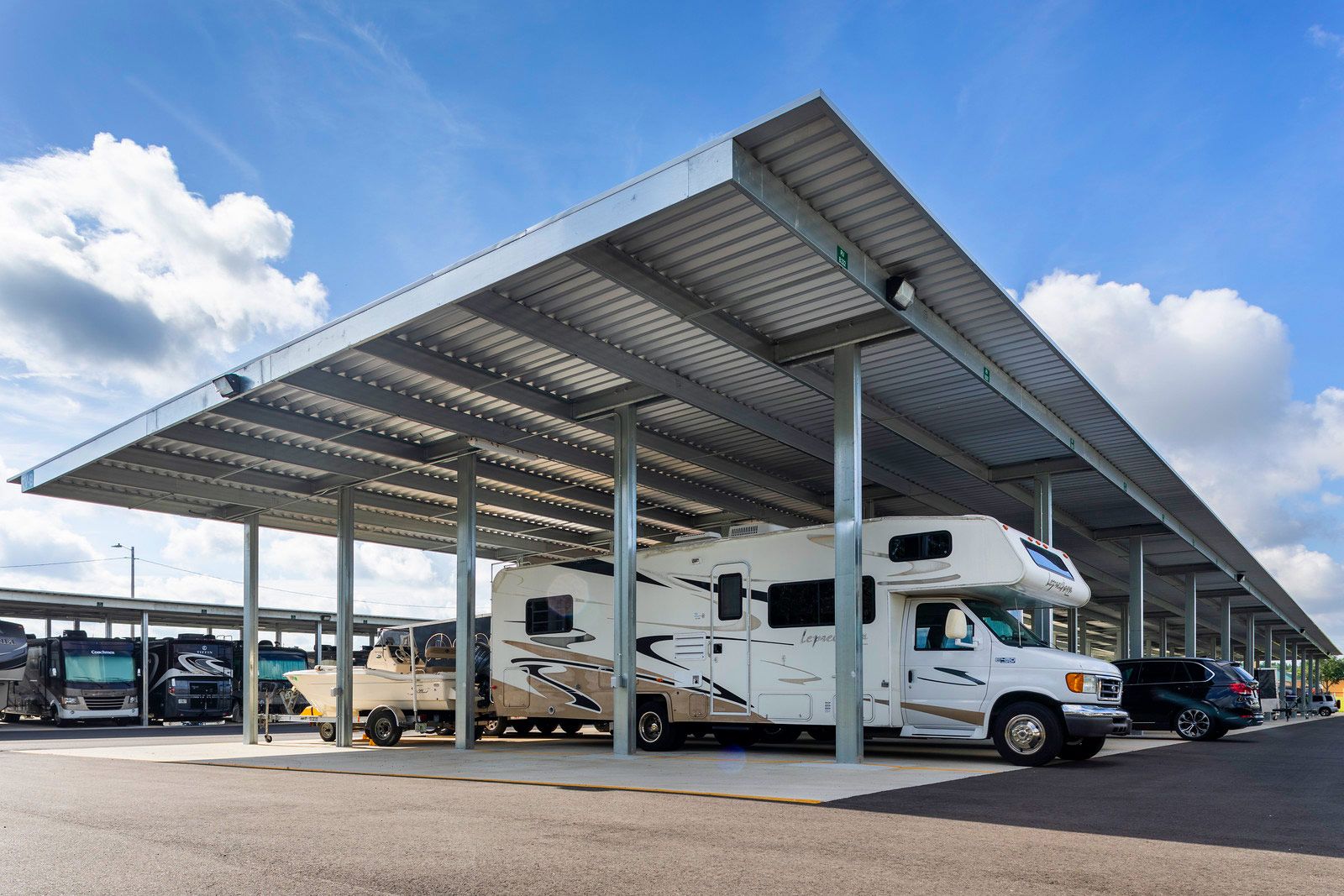
Oxford RV Storage accommodates work trucks alongside RVs, boats, and personal vehicles. The facility offers:
- Gated access with individual codes
- Space for larger commercial vehicles
- Lighting and security appropriate for valuable equipment
Located on the east side of the Atlanta Metro near I-20, it works well for contractors serving Newton, Rockdale, and eastern Dekalb counties, or anyone working along the I-20 corridor.