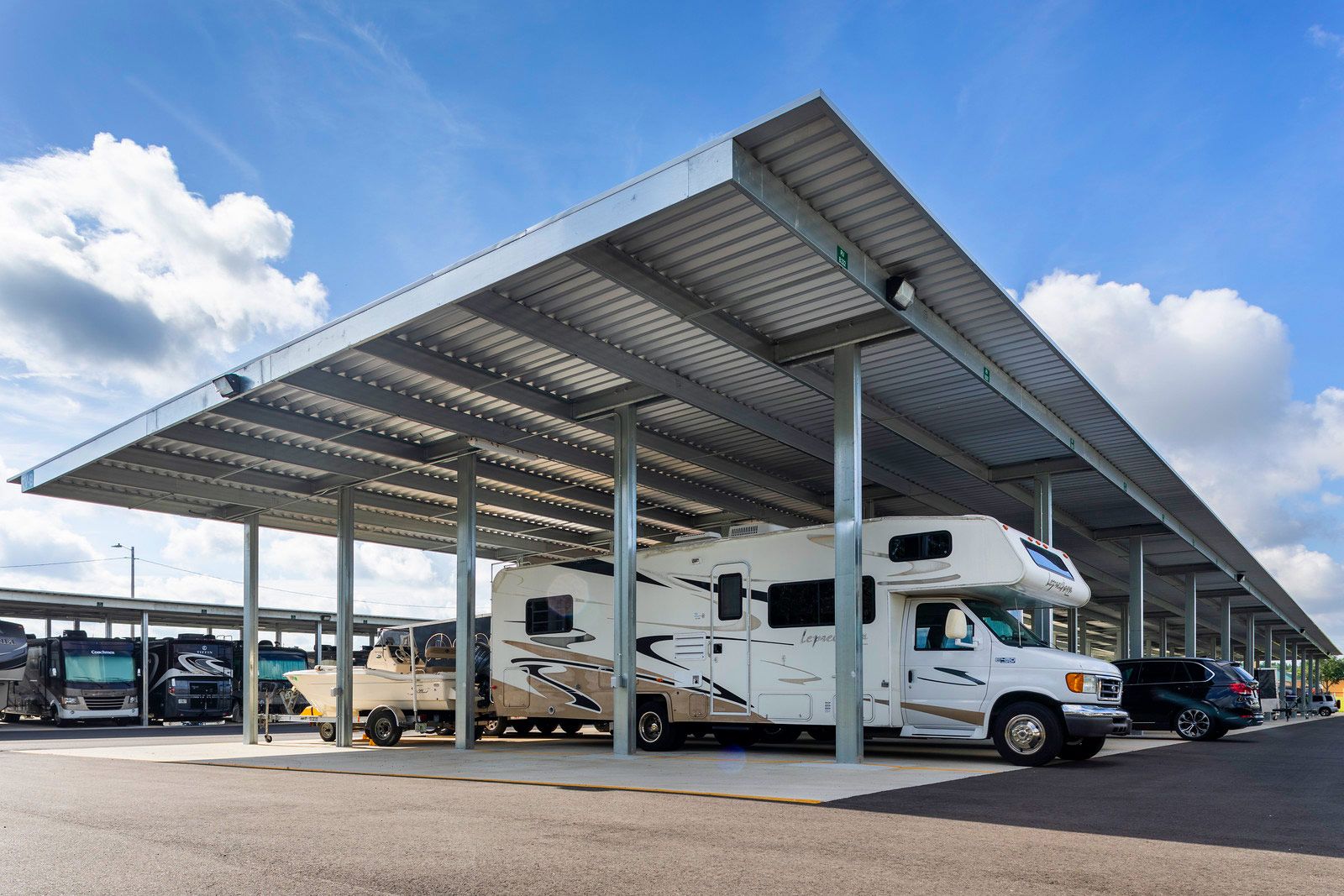
Secure, Battery-Maintained Storage for Luxury Cars in Atlanta
Dead batteries are the number one problem when retrieving cars from storage. Modern luxury cars are particularly vulnerable—their sophisticated electronics draw power constantly, draining batteries in as little as 2-3 weeks. Understanding battery maintenance options helps you choose appropriate storage and avoid the frustrating start to your post-storage drive.
Why Luxury Car Batteries Die in Storage
Parasitic Drain
Modern luxury cars have extensive systems that draw power even when "off":
- Alarm systems
- Keyless entry receivers
- Computer modules staying in standby
- Clock and memory functions
- Telematics systems (OnStar, BMW Assist, etc.)
- Infotainment system standby
Typical drain: 30-80 milliamps (luxury cars often higher)
At 50mA drain on a 70Ah battery, you have roughly 1,400 hours (58 days) to complete discharge—but batteries are damaged well before reaching zero. Practical timeline is 2-4 weeks to problematic voltage.
Temperature Effects
Heat (Georgia summers):
- Accelerates chemical degradation
- Increases parasitic drain
- Evaporates electrolyte in conventional batteries
Cold (Georgia winters):
- Reduces battery capacity
- Makes starting harder
- Can freeze discharged batteries
Discharge Damage
Batteries that discharge deeply (below ~12.0V) suffer:
- Sulfation (crystals form on plates)
- Reduced capacity
- Shortened lifespan
- Possible permanent damage
A battery that dies once in storage may never recover fully.
Battery Maintenance Options
Self-Maintained (Most Storage Facilities)
You're responsible for battery care. The facility provides space and security; you handle maintenance.
Your options:
1. Battery maintainer/tender
A device that monitors battery voltage and provides charge as needed.
Requirements:
- Electrical access (outlet near your vehicle)
- Maintainer appropriate for your battery type
- Proper connection (clips or ring terminals)
Good options:
- CTEK (various models for different battery types)
- Battery Tender Plus
- Schumacher maintainers
Cost: $30-100 for the maintainer; may need to pay facility for electrical access
Note: Some luxury cars have specific maintainer requirements—check your manual.
2. Solar maintainer
A solar panel that provides trickle charge during daylight.
Pros:
- No electrical outlet needed
- Works in outdoor/covered storage
- Simple installation
Cons:
- Weather and shade-dependent
- May not keep up with high-drain vehicles
- Needs good sun exposure
Good for: Supplementing battery life, not necessarily full maintenance on luxury vehicles with high drain.
3. Battery disconnect
Physically disconnecting the battery prevents parasitic drain.
Pros:
- No equipment needed
- Completely stops drain
- Free
Cons:
- Resets all electronics (radio presets, seat positions, etc.)
- Some vehicles require dealer recoding after reconnection
- May trigger anti-theft systems on some models
- Requires reconnection before starting
Note: Check your specific vehicle before disconnecting—some luxury brands have specific procedures or warnings.
4. Periodic starting
Visit the storage facility and run the car long enough to recharge the battery.
Pros:
- Also exercises other systems
- Requires no equipment
Cons:
- Requires regular visits
- Partial warm-ups can cause more harm than good
- Need to run 20-30+ minutes for meaningful charge
Facility-Maintained Options
Some premium storage facilities include battery maintenance:
What they provide:
- Battery monitoring
- Trickle charging as needed
- Notification if issues arise
- Peace of mind
Where to find:
- Collector car storage facilities
- Premium/concierge storage services
- Some RV storage facilities (for their regular customers)
Cost: Included in premium storage rates ($400-800+/month) or as an add-on service
Choosing Based on Your Situation
DIY-Friendly Owners
If you're comfortable with:
- Choosing and installing a maintainer
- Visiting periodically to check
- Handling any issues that arise
Best option: Standard covered or indoor storage with electrical access and your own maintainer.
Cost: Storage + maintainer + possible electrical fee = $100-250/month total
Hands-Off Owners
If you want storage without involvement:
Best option: Premium storage with battery maintenance included.
Cost: $400-800+/month (but includes multiple services)
Frequent Access Owners
If you'll drive the car at least monthly:
Option: Standard storage; the car's own charging system handles battery maintenance through regular use.
Note: You still might want a maintainer for peace of mind between drives.
Very Long-Term Storage
For 6+ months without driving:
Best option: Either premium storage with maintenance or standard storage with quality maintainer AND periodic checks.
Consider: Having the battery removed and maintained separately for very long storage periods.
Battery-Specific Considerations
Lead-Acid Batteries
Standard in most vehicles. Any quality maintainer works.
Note: Check electrolyte levels periodically (if not sealed).
AGM Batteries
Common in luxury cars. Require AGM-compatible maintainer settings.
Note: More sensitive to overcharging; use appropriate equipment.
Lithium-Ion Batteries
Found in some newer luxury and performance vehicles.
Critical: Require lithium-specific maintainers. Standard lead-acid maintainers can damage lithium batteries.
Multiple Battery Systems
Some luxury cars have multiple batteries (starting + auxiliary).
Note: Know your car's battery configuration; both may need attention.
Oxford RV Storage Battery Options
Oxford RV Storage is a self-maintained facility—you're responsible for your own battery care. The facility may have electrical access available for maintainers (verify when renting).
For hands-on owners who will install their own maintainer and check periodically, this works well. For owners wanting included battery maintenance, premium storage facilities in Atlanta with concierge services are more appropriate.