How Industrial Storage Works for Small Businesses in Georgia
Small businesses in Georgia face a common challenge: you need space for equipment, vehicles, or inventory, but you don't need (or can't afford) a full commercial property. Understanding how industrial storage works helps you find appropriate solutions without overcommitting.
What Small Businesses Typically Need
Vehicle Storage
Common needs:
- Work trucks and vans
- Service vehicles
- Delivery vehicles
- Company cars not used daily
Why off-site: HOA restrictions, residential appearance, security concerns, space limitations
Equipment Storage
Common needs:
- Tools and equipment between jobs
- Seasonal equipment
- Backup equipment
- Inventory of parts/supplies
Why off-site: Security, space at home/office, keeping work separate from home
Inventory Storage
Common needs:
- Product inventory
- Raw materials
- Finished goods awaiting shipment
Why off-site: Volume exceeds on-site capacity, need for specific conditions
Operational Space
Common needs:
- Light assembly
- Packaging
- Distribution staging
Why separate: Zoning issues at home, need for professional appearance, customer access
Storage Options for Small Businesses
Self-Storage Units
What it is: Individual units (typically 5x5 to 10x30) with your own lock
Best for:
- Inventory and supplies
- Tools and equipment
- Seasonal storage
- Businesses starting out
Limitations:
- Size constraints
- No business operations usually allowed
- Access hours may be limited
Cost: $75-400/month depending on size
Vehicle/Equipment Storage Facilities
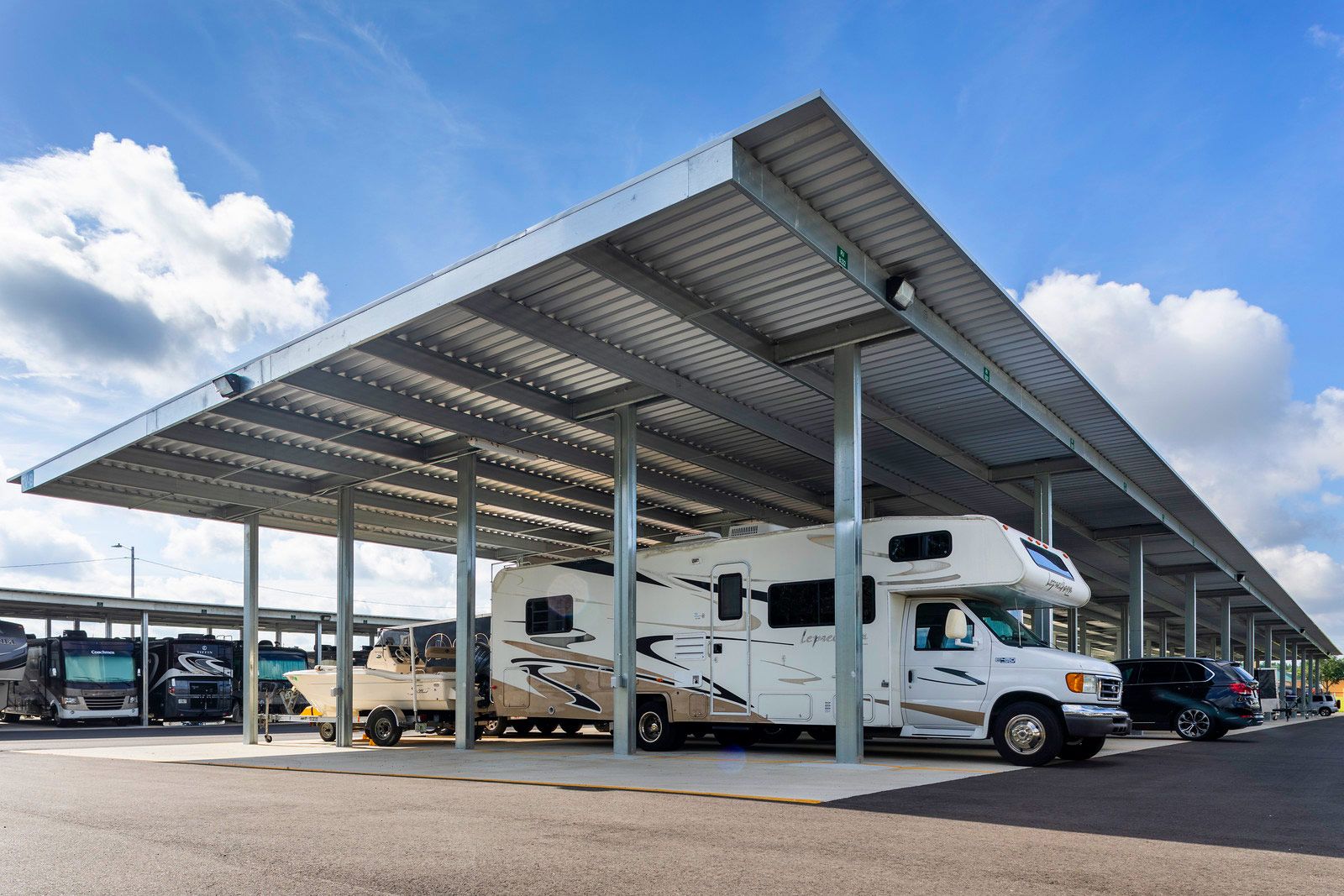
What it is: Outdoor or covered parking for vehicles and equipment
Best for:
- Work trucks and vans
- Trailers and equipment
- Vehicles parked overnight/weekends
Limitations:
- No building space
- Limited to vehicle parking
- May not handle very heavy equipment
Cost: $75-250/month per vehicle
Small Warehouse/Flex Space
What it is: Small commercial spaces (500-2,500 sq ft typically) with warehouse characteristics
Best for:
- Inventory that exceeds self-storage capacity
- Operations needing workspace
- Professional appearance
- Customer-facing needs
Limitations:
- Longer lease commitments often required
- Higher cost
- More setup/management
Cost: $400-1,500/month for small spaces
Shared/Co-Warehousing
What it is: Sharing larger warehouse space with other businesses
Best for:
- Growing businesses not ready for own space
- Seasonal inventory fluctuations
- Testing warehouse needs
Limitations:
- Less control over space
- Shared access
- May require minimum commitments
Cost: Varies widely by arrangement
How It Works in Practice
Getting Started
- Assess your actual needs: What are you storing? How much space? How often accessed?
- Determine requirements: Security level, access hours, climate needs, vehicle access
- Research options: Start with lowest-commitment options that meet your needs
- Visit before committing: Verify the space actually works for your use
Typical Process
For vehicle storage:
- Contact facility
- Provide vehicle information
- Sign agreement (often month-to-month)
- Get access credentials
- Start using immediately
For self-storage:
- Choose unit size
- Sign lease (typically month-to-month available)
- Get access code/key
- Move in your items
For commercial space:
- Tour available spaces
- Negotiate terms
- Sign lease (often 1-3 year minimum)
- Set up utilities/services
- Build out if needed
Costs Beyond Rent
Self-storage and vehicle storage:
- Deposit (usually 1 month)
- Insurance requirements
- Admin fees (often $25-50)
Commercial space:
- Security deposit (often 2-3 months)
- Utilities
- Insurance
- Maintenance/CAM fees
- Build-out costs
Matching Storage to Business Stage
Just Starting Out
Typical approach:
- Store equipment at home initially
- Use self-storage for excess
- Vehicle storage if HOA is an issue
Focus: Minimize fixed costs, maintain flexibility
Established Small Business
Typical approach:
- Dedicated vehicle storage
- Self-storage or small warehouse for inventory
- Consider flex space for operations
Focus: Balance cost with professionalism and efficiency
Growing Business
Typical approach:
- Larger warehouse or flex space
- Dedicated vehicle parking
- Consider own commercial property
Focus: Space for growth, operational efficiency
Georgia-Specific Considerations
Climate Needs
Georgia's heat and humidity affect:
- Electronic equipment (may need climate control)
- Paper products and documents
- Certain inventory types
Standard outdoor/uncovered: Fine for vehicles and weather-resistant equipment
Indoor/climate-controlled: Better for sensitive inventory and materials
Growth Areas
Businesses locating storage should consider:
- Where their work is concentrated
- Transportation access
- Future growth plans
I-20 East: Growing area with good options I-85 South: Distribution corridor I-75 North: Established industrial/commercial
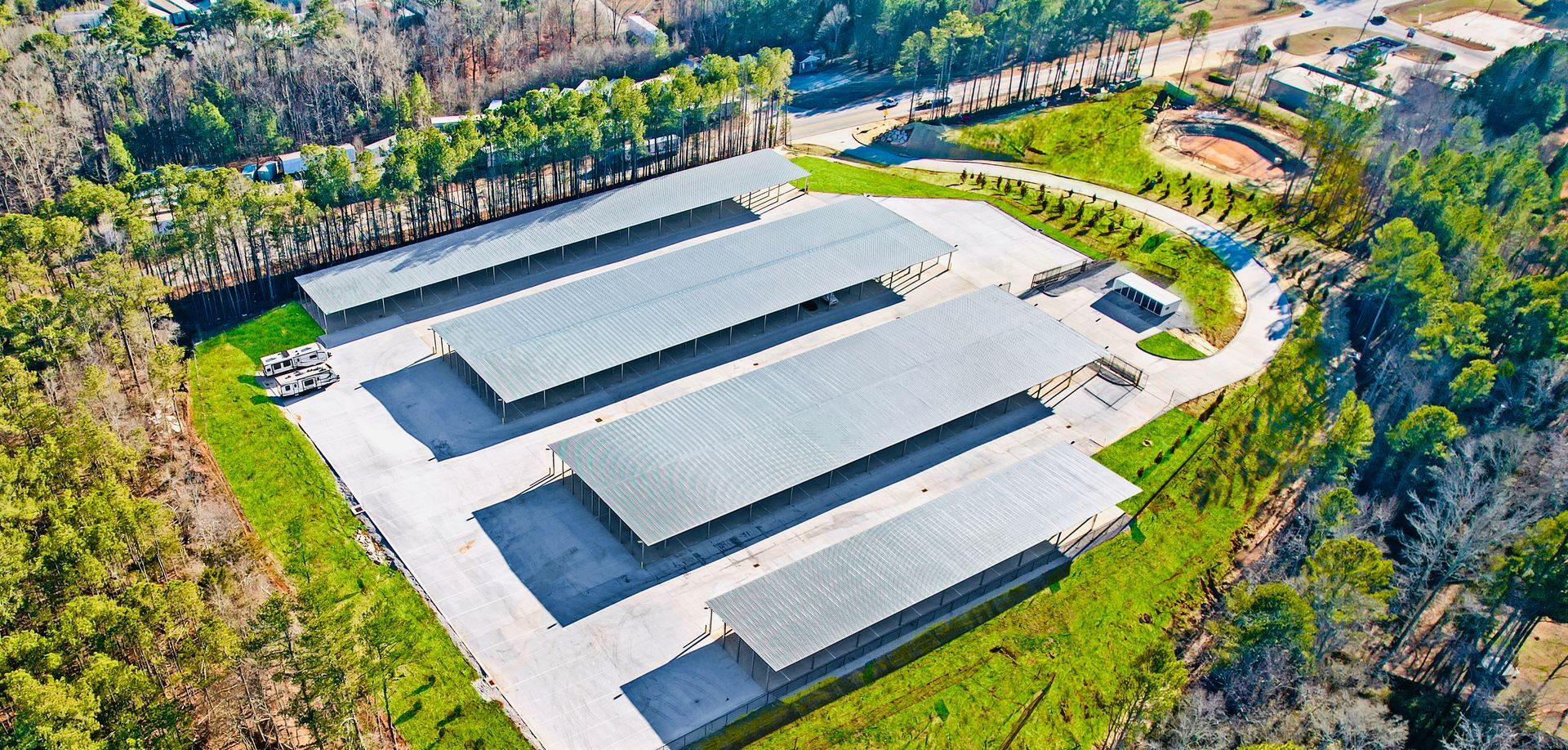
Oxford RV Storage for Small Business
Oxford RV Storage accommodates small business vehicle storage needs:
- Work trucks and vans
- Service vehicles
- Equipment trailers
- Company vehicles
The facility offers gated access with security appropriate for business assets at east-Metro pricing. For businesses needing building space or heavy equipment storage, additional commercial options in the area would be needed.